Things to Do, Guides
Haute Couture Meets Heavy Machinery: Rome's Moda in Luce Exhibition

|
By Alyssa | WhatsOn local events writer Alyssa picks out timely events, local favourites and useful places to eat, stay and explore. |
Quick details
| What | Moda in Luce 1955–1975: Roma fra glamour e innovazione industriale |
|---|---|
| Date | 26 June - 15 November 2026 |
| Where | Centrale Montemartini |
| Tickets | Tickets and info |
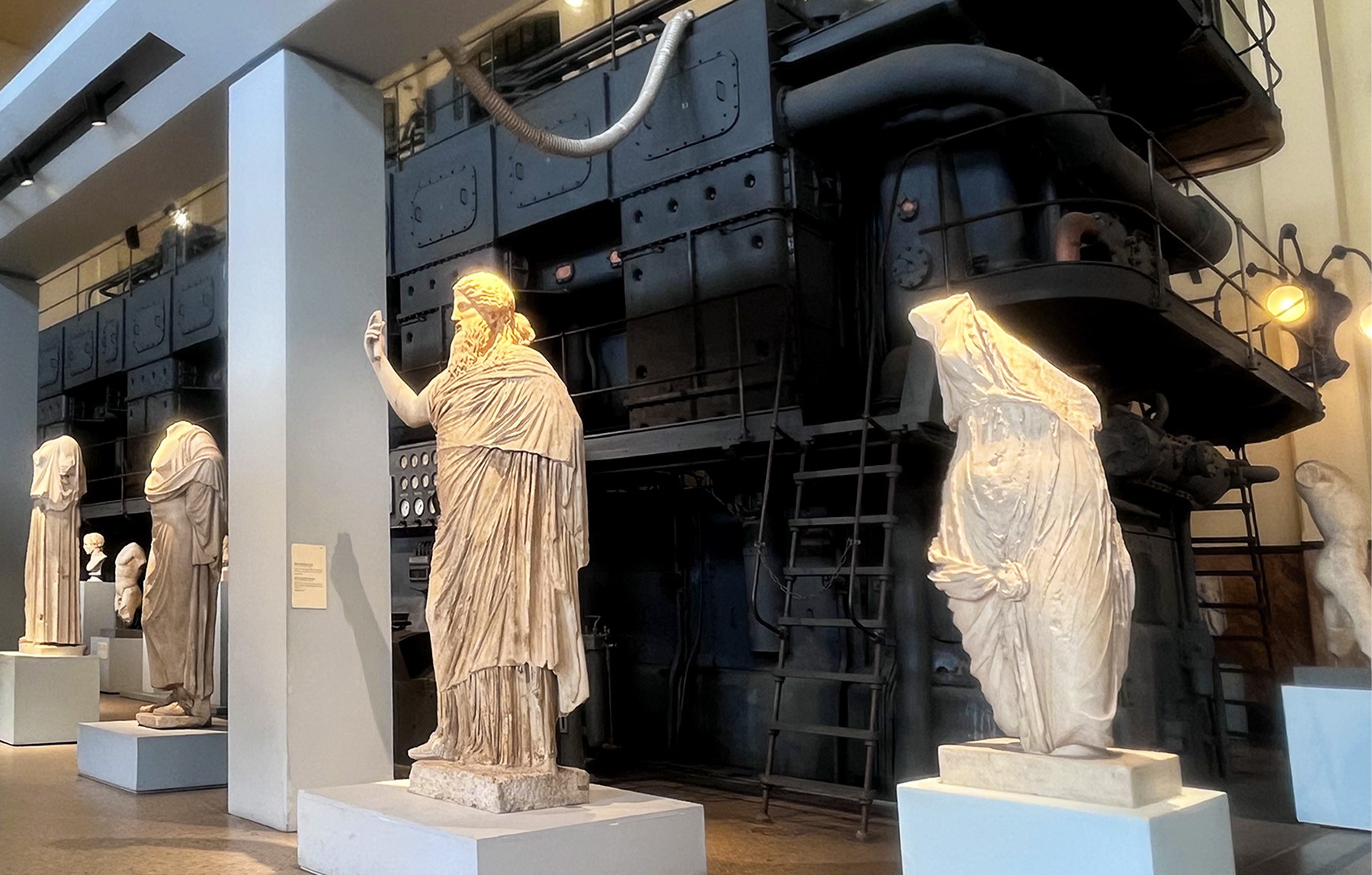
Picture the sharp, structured elegance of a 1960s Roman cocktail dress standing in stark relief against the hulking, cast-iron frame of an early twentieth-century diesel engine. The air inside the Centrale Montemartini always carries a faint, historical coolness, but this autumn, this cavernous former power plant crackles with a decidedly glamorous energy. You walk past the colossal black turbines—symbols of Rome’s gritty industrial past—only to be met with the dazzling reds and shimmering golds of mid-century Italian fashion. It is an aesthetic collision that stops you in your tracks, and it perfectly encapsulates why the city's cultural scene is buzzing right now.
We are right in the middle of the run for Moda in Luce 1955–1975: Roma fra glamour e innovazione industriale, and it is arguably the most visually striking exhibition in Rome this season. Running until mid-November, the showcase explores the vital twenty-year stretch when the Italian capital transformed into a global powerhouse of haute couture, inextricably linked with the golden era of cinema and the post-war economic boom. This was the era of the 'Hollywood on the Tiber', when international stars flocked to Cinecittà studios and local ateliers began defining what would become the legendary 'Made in Italy' label. But what makes this a truly monumental event isn't just the sheer calibre of the garments on display—it is the venue itself. The Centrale Montemartini, with its existing collection of ancient marble statues set among defunct industrial machinery, creates a surreal, three-layered tapestry of Roman history that you simply cannot find in a traditional white-walled gallery.
Silks, Sequins and Cast Iron
The magic of this exhibition lies in its fierce contrasts. Moving through the old Boiler Room, you are enveloped by the visual tension between soft, delicate textiles and unyielding, soot-stained metal. The curation leans heavily into this drama, using dramatic lighting that casts long, cinematic shadows across the gallery floor, highlighting the intricate beadwork of a sweeping evening gown before trailing off into the cold, matte surface of an old pressure valve.
For those drawn to the romance of the era, the exhibition offers an intimate look at the meticulous craftsmanship that dressed the stars of the Dolce Vita generation. You will find yourself lingering over the immaculate tailoring of sharp daytime suits and the dramatic silhouettes of sweeping capes, mentally transporting them to the bustling terraces of Via Veneto. Design enthusiasts, meanwhile, will be captivated by the narrative of innovation. The showcase brillianty documents the shift from the rigid, highly formal structures of the 1950s into the looser, experimental, and industrially produced textiles of the 1970s, mapping out the precise moment fashion became both an art form and a massive global industry.
A Crowd of Aesthetes and Historians
Because of its unique setting away from the historic centre's heaviest foot traffic, the atmosphere here hums with an appreciative, in-the-know energy. You will brush shoulders with fashion students leaning in close to study complex seamwork, sketchbooks balanced on their knees, while local film buffs quietly point out references to iconic mid-century movies to their friends. It is a wonderfully mixed crowd, united by a shared appreciation for design.
There is a distinct communal feel as visitors naturally congregate around the most dramatic centrepieces, exchanging whispered observations about how the pristine white marble of a second-century Roman bust perfectly complements the modern geometry of a 1960s shift dress nearby. Older Romans can often be heard reminiscing about the fabrics and cuts of their youth, grounding the high-glamour exhibits in tangible, personal memories that make the whole experience feel deeply human.
Know Before You Go
- When: The exhibition runs until 15 November 2026.
- Where: Centrale Montemartini, Via Ostiense, 106, 00154 Roma RM.
- Tickets: Entry to the exhibition is included with standard museum admission. Advance booking is highly recommended to secure your preferred time slot via the official Centrale Montemartini website.
- Getting there: The museum is located in the Ostiense district. It is easily accessible via the Metro B line (alight at Garbatella station, followed by a short walk) or via various local bus routes.
- Accessibility: The industrial venue has been thoughtfully adapted, with ramps and lifts making the main exhibition spaces fully accessible.
Make a Weekend of It
Ostiense is one of Rome's most fascinatingly layered neighbourhoods, making it the perfect starting point for a wider exploration of the city's contrasts. Before diving into the glamour of the exhibition, you might want to start your morning slightly closer to the Vatican with a brilliant coffee and pastry; Caffè Delle Commari on Via Santamaura offers a lovely, friendly atmosphere to fuel up before a day of gallery hopping.
After you have spent a few hours marvelling at the cinematic dresses next to the steam turbines, a short hop over the river into Trastevere brings you back to the quintessential Roman charm you likely travelled here for. Seek out Rione 13 Ristorante on Via Roma Libera. The service here is exceptionally warm and professional—the kind of place where the staff genuinely care about your experience—making it a perfect spot to decompress over fantastic modern Roman plates.
If you prefer to head right into the historic heart of the city as evening falls, you are spoilt for choice. For a truly lively, local atmosphere right by the market, Romoletto near Campo de' Fiori is brilliant, especially if you can snag a table outside on a mild evening. Alternatively, wander up towards Piazza Navona and settle onto the charming plaza terrace at Camillo - a Piazza Navona dal 1890, where you can transition smoothly from late-afternoon coffee into excellent cocktails and classic plates as the streetlights begin to glow.
For those who want to lean fully into the mid-century nostalgia, there is perhaps nothing more fitting than an indulgent dinner at Ristorante Alfredo alla Scrofa. Famous for its rich, theatrical history and its namesake Fettuccine Alfredo, it captures the exact old-school glamour you've just spent the afternoon admiring. Finally, no Roman evening is complete without a sweet finish. Take a leisurely stroll towards the Spanish Steps and join the queue at Venchi Cioccolato e Gelato, Roma Via della Croce, Piazza di Spagna; their pistachio and dark chocolate pairings are legendary, and entirely worth the wait.
I will be the one trying to figure out how they managed to get that silk to drape so perfectly—see you in the Boiler Room. Alyssa for What's On Rome.