Things to Do, Exhibitions
Contemporary Film Meets Bernini: Isaac Julien at Galleria Borghese

|
By Alyssa | WhatsOn local events writer Alyssa picks out timely events, local favourites and useful places to eat, stay and explore. |
Quick details
| What | Exhibition: Isaac Julien. All That Changes You. Metamorphosis |
|---|---|
| Date | 15 September - 25 October 2026 |
| Where | Galleria Borghese |
| Tickets | Tickets and info |
| Contact | 06 841 3979 |
Step into the gilded, echoing halls of the Galleria Borghese, where Bernini's marble sculptures seem to breathe and you naturally expect absolute adherence to the classical past. The air usually carries a hushed, reverent stillness. But for six fleeting weeks this autumn, those ancient gods and frescoed ceilings are locked in a dramatic, distinctly modern conversation.
Isaac Julien’s latest exhibition, All That Changes You. Metamorphosis, has taken over the opulent rooms of this legendary museum. It is a rare, exceptionally bold intervention for the Borghese. Julien's contemporary film installations and visual artistry pull directly from Ovid’s ancient myths, breathing striking twenty-first-century life into the very stories depicted in the centuries-old masterpieces surrounding them. It is a masterclass in juxtaposition, proving that the themes of transformation, desire and power have not aged a day.
Modern Myths Among Gilded Masterpieces
The sensory contrast is immediate and thrilling. The cool, crisp glow of contemporary high-definition screens illuminates the intricate marble floors, casting new shadows across Caravaggio's dramatic chiaroscuro canvases. Instead of wandering in quiet contemplation, you are enveloped by the soaring, cinematic scores of Julien's video works drifting through the pristine galleries.
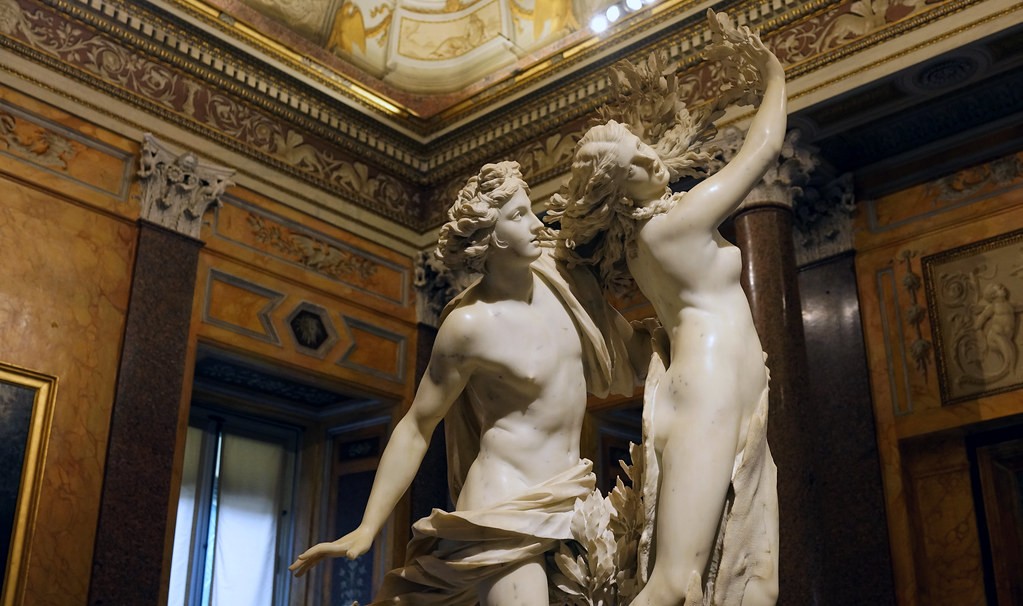
The exhibition does not feel like a separate entity awkwardly placed within a historic space; rather, it acts as a mirror. As you watch Julien's fluid, mesmerising choreography on screen, you can turn your head to see Bernini's Apollo and Daphne frozen mid-chase. It is a dialogue between the artists of the past and a visionary of the present, with Ovid's timeless tales of shapeshifting and metamorphosis acting as the bridge.
A Crowd Seeking Transformation
The atmosphere inside the galleries feels electric, charged by the knowledge that this specific blending of eras is so short-lived. You will find yourself brushing shoulders with whispering art historians decoding the visual parallels, curious modernists drawn by Julien's esteemed reputation, and seasoned Romans who have visited the Borghese dozens of times but are suddenly seeing its permanent collection with completely fresh eyes. There is a palpable, communal sense of privilege in the room. Every person standing shoulder-to-shoulder in the dimmed light has planned meticulously to secure their spot, adding to the feeling that you are witnessing a true, fleeting cultural moment in the capital.
Know Before You Go
- Booking is critical: Tickets for the Galleria Borghese are notoriously difficult to secure on a normal day. With this exhibition included in the standard admission, they will vanish instantly. You must book weeks in advance via the official Galleria Borghese website.
- Strict time limits: All visits to the museum are rigidly capped at two hours. The staff will clear the museum at the end of your time slot, so pace yourself to ensure you see both floors.
- Arrive early: You must arrive at least 15 to 20 minutes before your entry time to pass through security and use the mandatory cloakroom for bags and umbrellas.
- Getting there: The museum sits deep within the sprawling Villa Borghese park. Allow a scenic 20-minute walk from the Spagna metro station, or take a taxi to the park's edge.
Make a Weekend of It
A morning spent absorbing such intense, contrasting art demands an afternoon unwinding in the historic centre. After a stroll through the leafy pathways of Villa Borghese down toward the Spanish Steps, reward yourself with a decadent stop at Venchi Cioccolato e Gelato, Roma Via della Croce, Piazza di Spagna. Their rich cremino and dark chocolate flavours are the perfect sugary pick-me-up.
For lunch, weave your way deeper into the winding streets of the Centro Storico. You cannot go wrong with Ristorante Alfredo alla Scrofa - Wikipedia, an institution famous for its historic roots and exceptional pasta. Alternatively, if you want to eat in the shadow of ancient columns, secure a table at Osteria da Fortunata - Pantheon for a plate of spectacular homemade gnocchi alla Sorrentina.
If you prefer a lighter, more contemporary lunch to match the modern art, the excellent Zia Rosetta offers a warm welcome and brilliant fried artichokes just a minute's walk from the Pantheon. Finally, as the evening draws in, head to Camillo - a Piazza Navona dal 1890 to sip an Aperol on their charming plaza terrace, watching the city transform as the sun sets over Rome's own monumental fountains.
I hope you manage to secure a ticket to this brilliant clash of centuries; it is exactly the kind of artistic magic that makes Rome so endlessly fascinating.