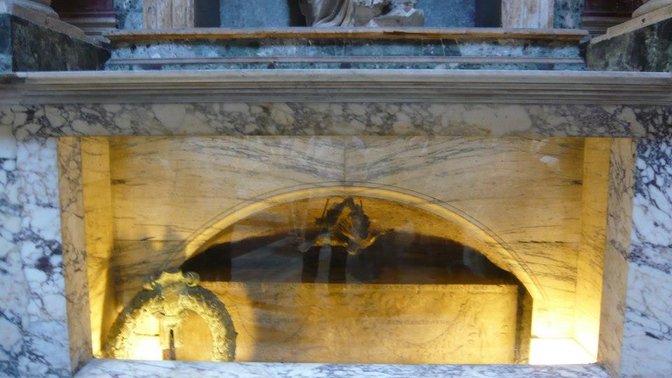
Raphael's Tomb
Piazza della Rotonda, 00186 Roma RM
Rating: 4.8 ★ (79 ratings)
Details
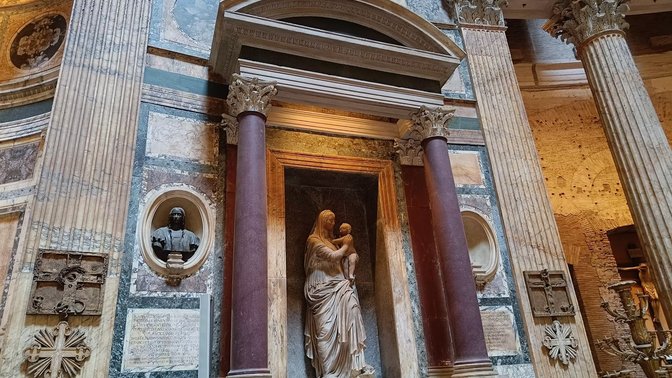
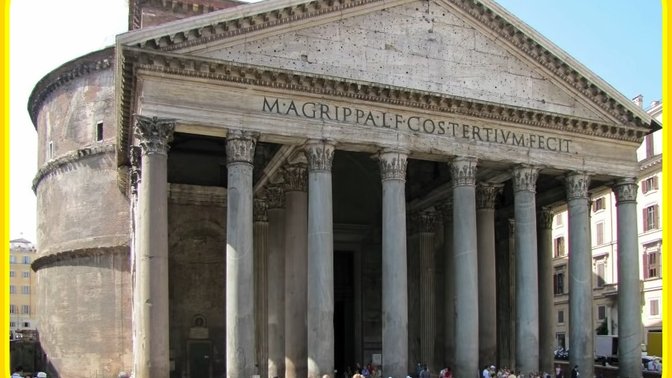
Raphael's Tomb resides within the awe-inspiring Pantheon in Rome, offering visitors a profound connection to Renaissance artistry amidst ancient architectural grandeur. This esteemed burial site serves as the final resting place for Raphael Sanzio, one of history's most celebrated painters, granting the area a reverent and reflective character. Situated discreetly within a side niche of the majestic circular temple, it stands out for those keen to experience a tangible piece of art history, linking the monumental past of Rome with the flourishing creativity of the Renaissance.
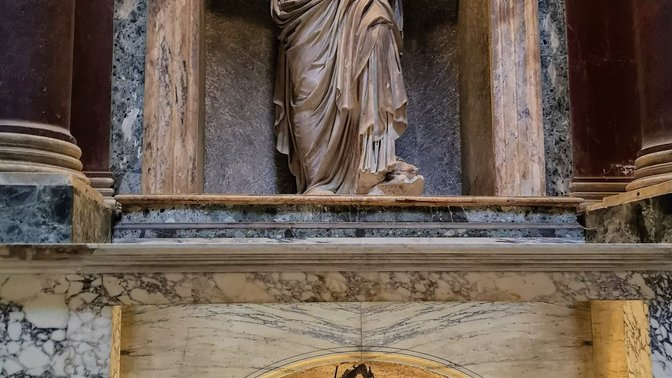
The main highlight of the tomb is the sculpture of the Madonna del Sasso, or Madonna of the Rock, crafted by Lorenzetto, a devoted pupil of Raphael and commissioned by the master himself. Below this tender artwork, an evocative Latin epitaph, composed by Raphael's friend Pietro Bembo, is inscribed on the sarcophagus, famously stating: "Here lies Raphael, by whom Nature feared to be outdone while he lived, and when he died, Nature died with him." Visitors can approach the burial niche and view the sarcophagus, whose contents were verified in 1833 by Pope Gregory XVI, affirming the artist's enduring presence within the venerable structure.
This poignant site is particularly well-suited for art enthusiasts, historians, and anyone seeking a moment of quiet contemplation within one of Rome's most iconic buildings. It offers a deeply resonant experience for those wishing to pay homage to Raphael's immense legacy and gain insight into the high regard in which he was held during his lifetime and beyond. A visit here works wonderfully for those who appreciate the intersection of artistic genius, historical significance, and architectural beauty, providing a brief yet impactful cultural encounter.
Location
Opening Hours
Monday: 9:00 AM – 6:30 PM | Tuesday: 9:00 AM – 6:30 PM | Wednesday: 9:00 AM – 6:30 PM | Thursday: 9:00 AM – 6:30 PM | Friday: 9:00 AM – 6:30 PM | Saturday: 9:00 AM – 6:30 PM | Sunday: 9:00 AM – 6:30 PM
Contact
+39 06 6830 0230 | https://www.direzionemuseistataliroma.beniculturali.it/istituti/pantheon/
Comments
Raphael's epitaph hails him as a preeminent painter and rival of the ancients (PICTORI EMINENTISS VETERVMQ AEMVLO); it also states that he died on his birthday (QVO DIE NATVS EST EO ESSE DESIIT), which may or may not be true.
Giorgio Vasari (1511-74), in his book Lives of the Artists (1550), simply notes that Raphael was born on Venerdi Santo (Good Friday), 1483, which in that year fell on March 28th. As April 6th, 1520, was also a Good Friday, he died after a manner of speaking on his birthday.
By the 19th century, Raphael had become a cult figure and on September 14th, 1833, Pope Gregory XVI (r. 1831-46) ordered that his tomb be opened to verify that the artist was really buried there. The tomb was opened in the presence of a host of distinguished figures. A skeleton was discovered and the doctors declared (on what grounds?) that this was, indeed, the earthly remains of Raphael. The event was duly recorded in a painting by Francesco Diofebi (1771-1851).
The skeleton was transferred to an ancient sarcophagus, a gift from the pope, on which were inscribed the last two lines of his epitaph: ILLE HIC EST RAPHAEL TIMVIT QVO SOSPITE VINCI / RERVM MAGNA PARENS ET MORIENTE MORI. The lines have been attributed to Pietro Bembo (1470-1547), a Venetian humanist, scholar and writer, who first met Raphael at the court of Urbino. They were paraphrased by the English poet Alexander Pope (1688-1744) in his Epitaph on Sir Godfrey Kneller (1723): ‘Living, great Nature fear'd he might outvye Her works; and dying fears herself may dye.’ Kneller, who was a very successful German portrait painter, is interred in Westminster Abbey, London.
Returning to Raphael's tomb, the sculpture of the Virgin and Child, which is known as the Madonna del Sasso (1523-24), is the work of one of Raphael's pupils, Lorenzo Lotti (1490-1541), better known as Lorenzetto. The rather insipid bronze bust (1833) of Raphael is the work of Giuseppe de Fabris (1790-1860).
Epitaph: RAPHAELI SANCTIO JOANN F VRBINATI / PICTORI EMINENTISS VETERVMQ AEMVLO / CVIVS SPIRANTEIS PROPE IMAGINES SI / CONTEMPLERE NATVRAE ATQUE ARTIS FOEDVS /FACILE INSPEXERIS / IVLII II LEONIS X PONTT MAXX PICTVRAE / ET ARCHITECT OPERIBVS GLORIAM AVXIT / V A XXXVII INTEGER INTEGROS / QVO DIE NATVS EST EO ESSE DESIIT / VIII ID APRIL MD XX / ILLE HIC EST RAPHAEL TIMVIT QVO SOSPITE VINCI / RERVM MAGNA PARENS ET MORIENTE MORI.
(To Raphael Sanzio of Urbino, son of Giovanni, most pre-eminent painter and rival of the ancients. If you examine his well-nigh breathing images, you will easily observe the bond between art and nature. With his works of painting and architecture, he magnified the glory of the Supreme Pontiffs Julius the Second and Leo the Tenth. He lived for thirty-seven years. He died on the date he was born, April 6th 1520. Living, great Nature feared he might outlive Her works and, dying, fears herself may die).
He died at the age of 37 from infection, was engaged to the Cardinals niece, and was in love with a bakers daughter. He never married, never sired any children, worked with Michaelangelo. His finance was Margherita and she is what the pizza is named after. She never married and devoted her life to Christ after the death of Raphael.
Get yourself a tour guide to learn important stuff like this.