Things to do

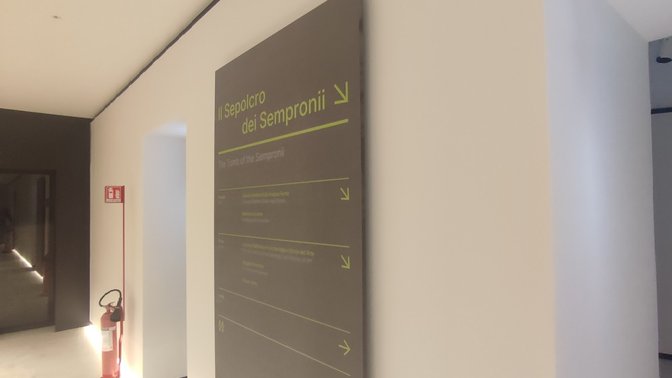
Sepolcro dei Sempronii

Via della Dataria, 21, 00187 Roma RM

Rating: 5.0 ★ (1 rating)

Details

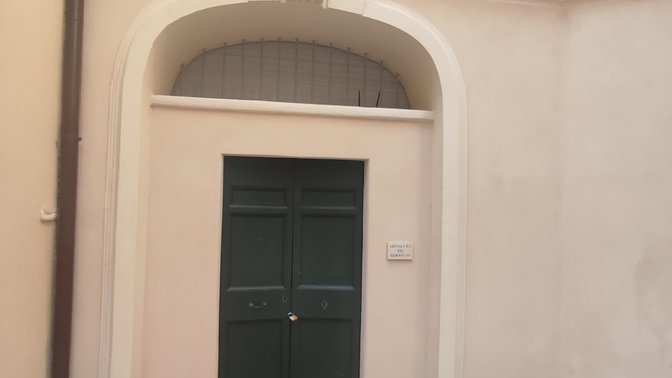
Sepolcro dei Sempronii, an ancient Roman tomb dating back to the late Republican age, offers a unique glimpse into the city's rich past. This extraordinary private funerary monument, from the 1st century BCE, resides beneath the Palazzo San Felice on the western side of the Quirinal Hill, along Via della Dataria. Discovered during the construction of the palace in 1863, its exceptional character lies in being an unearthed, yet long-hidden, archaeological gem that beautifully illustrates the layered history of Rome, providing a rare opportunity to connect with ancient family legacies and the city's evolving urban fabric.

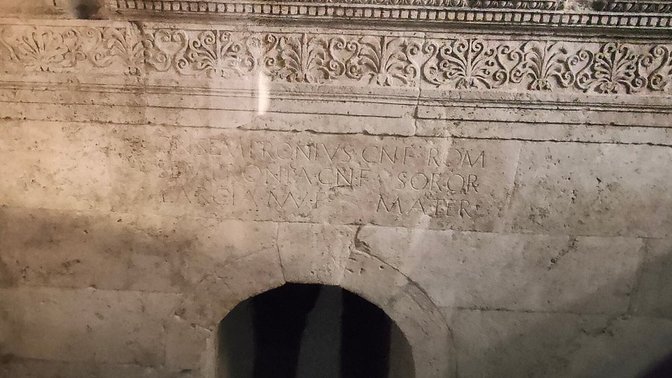
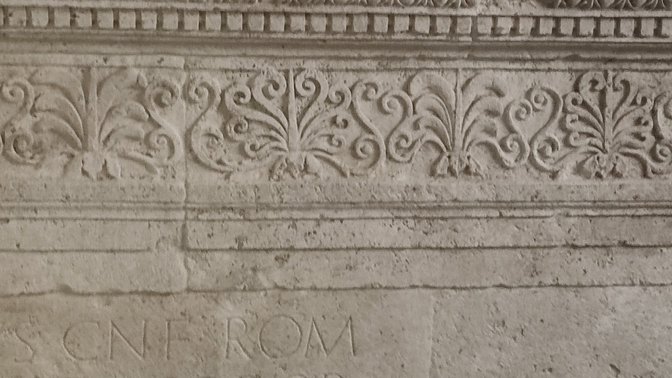
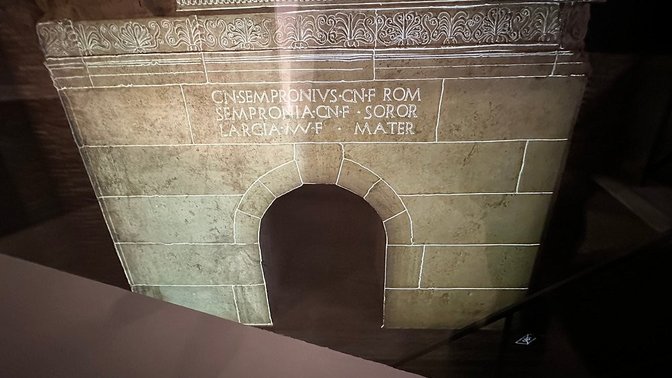
The tomb's main features include a dignified façade constructed from robust travertine blocks, which originally rose from a high plinth, now situated underground. An arched entrance leads into the structure, and above this, a clear inscription identifies the tomb's occupants: Gnaeus Sempronius, his sister Sempronia, and their mother Larcia. Further embellishing the entrance is an elegant frieze adorned with palmettes and an egg-and-dart frame, characteristic decorative motifs of the late Republican period. A vaulted corridor, also built with travertine, once extended to a burial chamber, of which a small portion in early brickwork still survives.

This fascinating site is particularly appealing to history enthusiasts and those with a keen interest in Roman archaeology and the evolution of ancient funerary architecture. Visits often form part of an immersive experience, such as the "Cultura in Cantiere" initiative, which combines historical exploration with contemporary digital installations and multimedia content, allowing visitors to appreciate the tomb from a unique, elevated vantage point. It provides an excellent context for educational tours and offers a profound appreciation for how ancient heritage seamlessly integrates into modern cultural projects, revealing Rome's enduring narrative.

Visit Website

Subscribe To Our Newsletter

Share this:

OR WhatsApp Facebook Email

Location

Contact

https://www.info.roma.it/monumenti_dettaglio.asp?ID_schede=2368

Comments

Roberto Cecchini
7 Apr 2026
5.0 ★
I'm adding this place to Maps—and this will be its FIRST review—because I was fortunate enough to have a sneak preview of it last summer, but it should be visible to everyone again within the year, with the opening of the palace that encompasses it. The Sempronii Tomb is a Roman funerary monument from the second half of the 1st century BC, discovered by chance in 1863 during construction of the Palazzo San Felice in Rome, on Via della Dataria, a short walk from the Quirinal Palace. Its historical importance stems from its connection to the gens Sempronia, one of the most illustrious families of ancient Rome, to which the Gracchi brothers belonged. The tomb does not contain the remains of the Gracchi (Tiberius, killed in 133 BC, and Gaius, killed in 121 BC), but, as an inscription above the entrance indicates, it was built for descendants of the family: Cnaeus Sempronius, his sister Sempronia, and their mother Larcia. The underground structure, constructed of opus reticulatum and brick, features niches for cinerary urns and is a rare example of a Republican tomb preserved in the heart of the city. It is located at the end of the chronological route that described the area (curiously, with the chronology in reverse). The history of the tomb is intertwined with the modern history of the site: the Palazzo San Felice was commissioned by Pope Pius IX as an annex of the Quirinale, a function it maintained both under the Savoy and the Republic. In 2017, the Presidency of the Republic ceded it to the Ministry of Culture to house the Library of Archaeology and History of Art, allowing for its restoration and, in 2025, its opening to the public for temporary visits on weekends. This restoration has allowed us to rediscover a long-forgotten monument, bringing to light a piece of Rome's historical topography and the memory of the Gracchi family, symbols of the struggle for social justice in ancient Rome. Above all, it's beautiful...it's reminiscent of a small triumphal arch. Don't miss it when you get the chance. Need some useful info? Then leave a like and check out my other reviews on Rome and beyond.

SUBSCRIBE TO OUR NEWSLETTER

Join 10,000 subscribers and never miss out on events happening in Rome again!