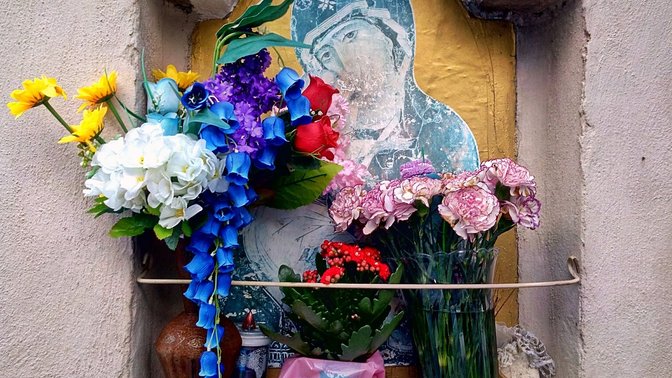
Edicola Sacra - Madonna di Vladimir
Via Fausto Vettor &, Via Domenico Chiodo, 00154 Roma RM
Rating: 5.0 ★ (1 rating)
Details
Edicola Sacra - Madonna di Vladimir stands as a modest yet profound sacred shrine, embedded within the historic urban tapestry of Rome. This particular 'edicola sacra', or street shrine, features a tender reproduction of the highly venerated Madonna di Vladimir icon, offering a quiet point of popular devotion. It embodies the enduring spiritual character often found in the city's countless nooks and crannies, providing a moment of serene contemplation away from the bustling thoroughfares.
The focal point of this shrine is the depiction of the Madonna di Vladimir, an ancient Byzantine icon renowned for its Eleousa or 'Tenderness' iconography. The image portrays the Virgin Mary affectionately embracing the Christ Child, their cheeks touching, with a solemn expression on Mary's face that hints at future sorrows. Typically, these street shrines are housed within a simple, often ornate, frame, sometimes accompanied by a protective canopy, reflecting a long-standing tradition of public religious art in Rome.
This sacred spot particularly appeals to those with an interest in Roman religious heritage, Byzantine art, and local devotional practices. It offers a subtle cultural experience for visitors seeking authentic glimpses into the city's spiritual life, perfect for a brief, reflective pause during a leisurely stroll through Rome's historic neighbourhoods. Its overall appeal lies in its quiet testament to faith and artistic tradition, serving as a tangible connection to centuries of popular piety.
Location
Opening Hours
Monday: Open 24 hours | Tuesday: Open 24 hours | Wednesday: Open 24 hours | Thursday: Open 24 hours | Friday: Open 24 hours | Saturday: Open 24 hours | Sunday: Open 24 hours
The work was created by carving a simple niche into the wall, just wide enough to accommodate an image and deep enough to protect it from adverse weather conditions. The recess houses a shelf at the bottom, containing a vase of colorful flowers on the left, a small plant in the center between a pair of small battery-powered votive candles, and finally, on the right, behind another glass vase of fresh flowers, almost hidden, a wedding "rice bag" (perhaps a votive gift, small but significant for the person who offered it).
Inside the niche, against a background covered in gold paint, stands the silhouette of a Madonna and Child depicted in Byzantine style. The image, taken from a poster or photographic enlargement, although partially faded by exposure to sunlight, is nevertheless legible and represents the "Theotokos of Vladimir," also known as the "Mother of God of Tenderness," "Our Lady or Virgin of Vladimir," one of the most venerated and famous Orthodox icons in the world, considered the "Protector of Russia." The original of this work, a 12th-century painting created at the court of the Comneni emperors, is now housed in the Tretyakov Gallery in Moscow.
Unfortunately, there is no historical reference to the true motivations behind the construction of this small sacred shrine: beyond the simplicity of the setting and the value of the materials used to create the work, here, as elsewhere in the neighborhood, we find a small, significant manifestation of faith and sincere popular devotion.