Casale Sellaretto
RHV9+H2, 00174 Rome, Metropolitan City of Rome Capital
Rating: 5.0 ★ (1 rating)
Details
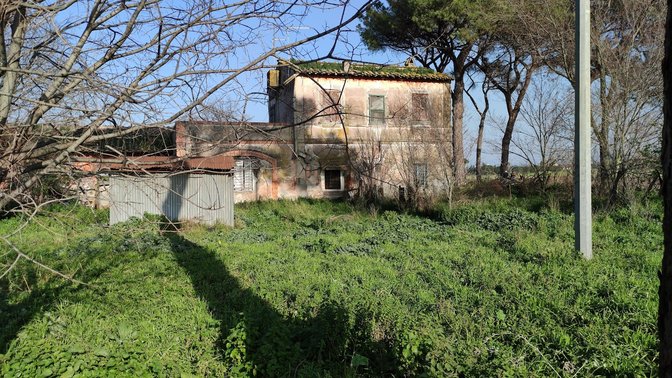
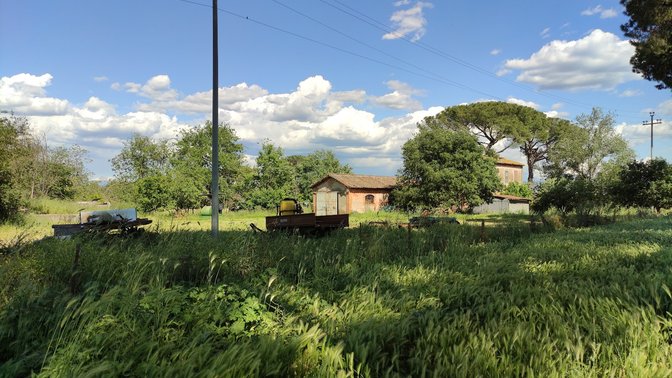
Proseguendo lungo il viale di Roma Vecchia nel punto in cui la via s’incrocia con la strada che porta al 7 km della via Tuscolana, giungiamo presso l’Antico Casale del Sellaretto. Splendido esempio di archeologia industriale, trasformato successivamente in casale agricolo in seguito alla dismissione della Linea Roma-Frascati. Il nome Sellaretto deriva da un errore dell’antica dicitura ” Sellaro ” , che venne probabilmente indotto da una cartografia del periodo bellico, come segnalato dallo studioso Sandro Iazzetti.
Location
Contact
https://parcodegliacquedotti.com/casale-del-sellaretto/
It was built in the mid-19th century as a functional structure for the railway commissioned by Pope Pius IX as the first section of the project to connect Rome with Ceprano, on the border of the Papal State. The line was inaugurated on July 7, 1856, and operated five journeys a day with a travel time of 28 minutes.
It was the first railway line built by the Papal State, equipped with six locomotives and six passenger cars. The first four locomotives bore the names of Saints Pio, Pietro, Paolo, and Giovanni, chosen by Pope Pius IX, who traveled the line in 1859 in a carriage made of gold and fine wood specially built for the pontiff.
The roadhouse was used until 1892, when the faster and more functional Rome-Naples railway was opened.
At that point, it fell into disuse and was converted into a farmhouse.
As for the name, the term "Sellaretto" derives from an error in the ancient spelling "Sellaro," likely induced by wartime cartography, as noted by scholar Sandro Iazzetti.