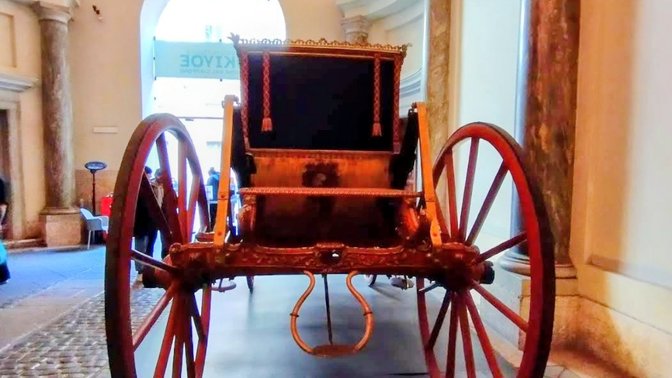
Berlina di gala della famiglia Chigi
Piazza di S. Pantaleo, 10, 00186 Roma RM
Rating: 5.0 ★ (1 rating)
Details
Berlina di gala della famiglia Chigi evokes the opulent ceremonial life of this historic noble family, a grandeur exquisitely preserved and best experienced at Palazzo Chigi in Ariccia. This magnificent Baroque residence, situated approximately sixteen miles south of Rome in the picturesque Colli Albani regional park, offers a rare glimpse into aristocratic Italian life. It stands as a unique example of a seventeenth-century palace that has remained largely unchanged over the centuries, maintaining its original character and an authentic atmosphere for visitors.
Within the palazzo, guests can explore the meticulously preserved private quarters of Cardinal Flavio Chigi, complete with authentic seventeenth-century furnishings. The museum areas proudly display an impressive collection of Roman Baroque art, featuring significant paintings and sculptures by masters such as Bernini and other notable artists of the era. The vast historical park surrounding the palace further enhances the visitor experience, offering serene walks amidst ancient trees and remnants of a past hunting reserve.
This historical treasure is particularly well-suited for those with a keen interest in Baroque art and architecture, Italian noble history, and cultural heritage. It provides an immersive journey back in time, making it an ideal destination for history buffs, art enthusiasts, and anyone seeking to understand the lavish lifestyle of influential Roman families. The overall appeal lies in its authenticity and the comprehensive insight it offers into a pivotal period of Italian artistic and social history.
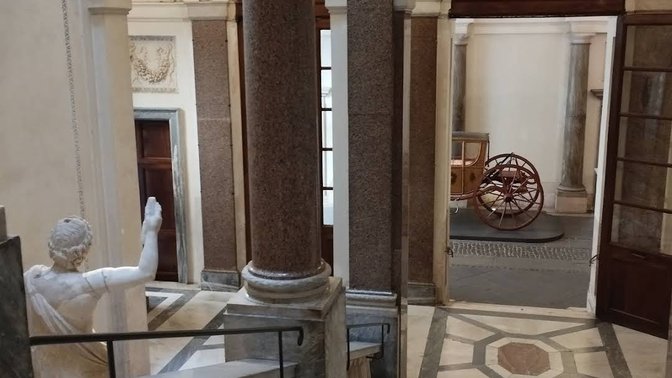
Technically, the sedan was cutting-edge for its time, equipped with a suspension system inspired by English technology that ensured superior comfort on the rough Roman pavements. Its cultural significance also lies in its ability to bear witness to an entire era of noble ceremonies, surviving the political upheavals of the post-unification period, when it continued to be used for gala events and parades. Today, its location in the entrance hall of Palazzo Braschi, right next to the monumental staircase, is no coincidence: it serves as a key scenic element, allowing us to re-enact the original atmosphere of the grand noble entrances, offering visitors an immediate insight into court life in 18th-century Rome.