Berlina di gala della famiglia Chigi
Piazza di S. Pantaleo, 10, 00186 Roma RM
Rating: 5.0 ★ (1 rating)
Details
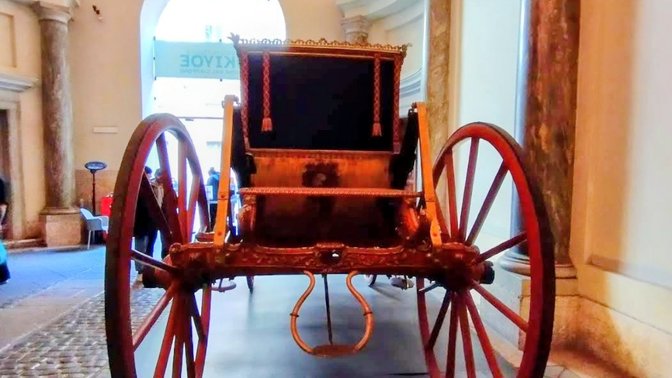
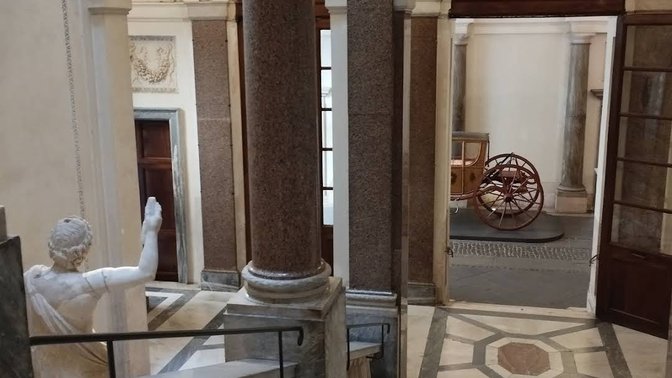
The Chigi family's gala sedan, dating back to 1776, is a relic of exceptional historical and artistic value, embodying the height of 18th-century Roman aristocracy. Built for Prince Sigismondo Chigi on the occasion of his marriage to Maria Giovanna Medici d'Ottaviano, this carriage was not a simple means of transportation, but a true "parade car" intended to display the family's prestige during public ceremonies. The design, attributed to architect Paolo Posi, blends the pomp of the late Baroque with early Neoclassical influences, thanks to the masterful work of carvers and gilders who decorated the structure with floral motifs, garlands, and the Chigi family's heraldic symbols, such as the mountains and the star. Technically, the sedan was cutting-edge for its time, equipped with a suspension system inspired by English technology that ensured superior comfort on the rough Roman pavements. Its cultural significance also lies in its ability to bear witness to an entire era of noble ceremonies, surviving the political upheavals of the post-unification period, when it continued to be used for gala events and parades. Today, its location in the entrance hall of Palazzo Braschi, right
Technically, the sedan was cutting-edge for its time, equipped with a suspension system inspired by English technology that ensured superior comfort on the rough Roman pavements. Its cultural significance also lies in its ability to bear witness to an entire era of noble ceremonies, surviving the political upheavals of the post-unification period, when it continued to be used for gala events and parades. Today, its location in the entrance hall of Palazzo Braschi, right next to the monumental staircase, is no coincidence: it serves as a key scenic element, allowing us to re-enact the original atmosphere of the grand noble entrances, offering visitors an immediate insight into court life in 18th-century Rome.