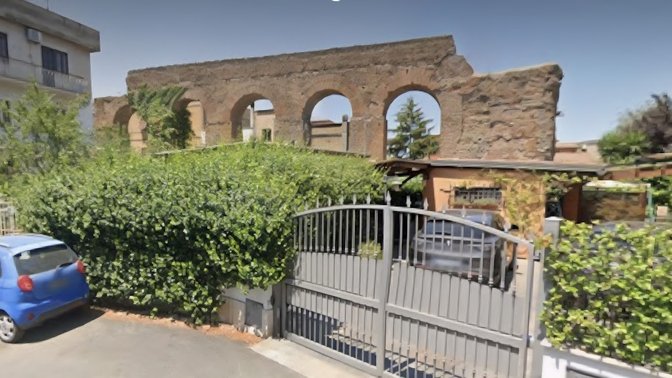
Acquedotto Alessandrino
Via Squinzano, 69, 00133 Roma RM
Rating: 5.0 ★ (1 rating)
Details
Acquedotto Alessandrino stands as the last of Rome's eleven ancient aqueducts, a monumental testament to Imperial Roman engineering, constructed in 226 AD by Emperor Alexander Severus. This impressive structure, built primarily to supply the Baths of Nero, later known as the Thermae Alexandrinae, to the Campus Martius, stretches for approximately 22 kilometres. Its character is defined by long, enduring sections of brick arches that majestically traverse parts of the city's eastern periphery, offering a captivating blend of ancient history amidst modern Roman life and green spaces, which creates a uniquely contemplative atmosphere for visitors.
Visitors can marvel at particularly well-preserved stretches of the aqueduct's arches near Viale Palmiro Togliatti, where a double row of arches provides a striking visual, and from Piazza San Felice da Cantalice. Further impressive ruins are visible in the Roman countryside around Tenuta della Mistica and Fosso Tre Teste, showcasing the aqueduct's grand scale in a more natural setting. Constructed using robust yet lightweight brick, the aqueduct's design allowed for a remarkably direct course, and it has undergone several significant restorations throughout its history, including notable works during the reigns of Diocletian and Pope Adrian I.
The Acquedotto Alessandrino is particularly well-suited for history enthusiasts and those with a keen interest in Roman archaeological sites beyond the city centre's main attractions. It offers a tranquil setting for leisurely walks, especially within public parks like Parco Sangalli, where the ancient arches provide a scenic backdrop. This enduring monument, narrating over 1800 years of history, appeals to visitors seeking an authentic historical experience and fantastic photographic opportunities, linking directly to Rome's imperial past within its contemporary urban fabric.
Unfortunately, along its entire length in the area, it is surrounded by private property, once as a boundary wall, once as the walls of buildings.
A real shame, because it is truly well preserved in some places.