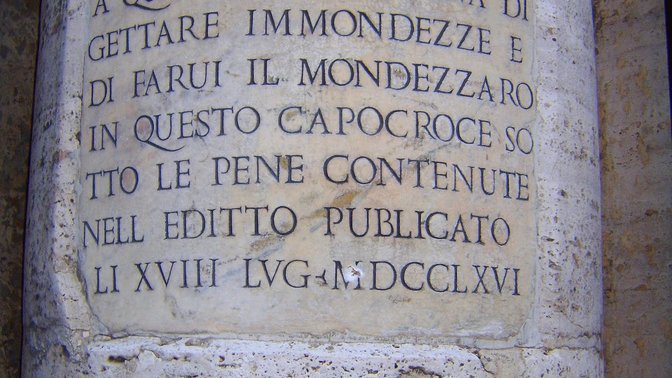
Targa del mondezzaro
Via del Gambero 28, Via Frattina, 70, 00187 Roma RM
Rating: 5.0 ★ (2 ratings)
Details
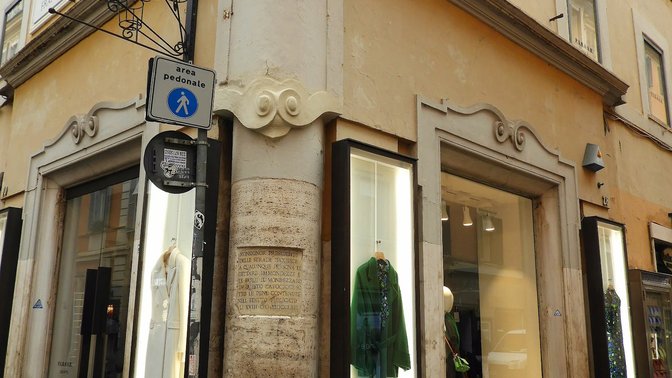
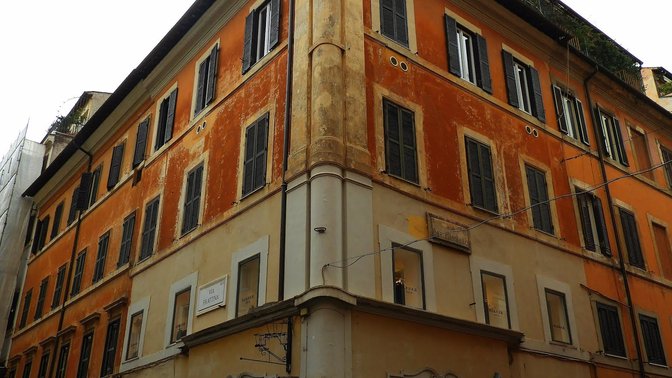
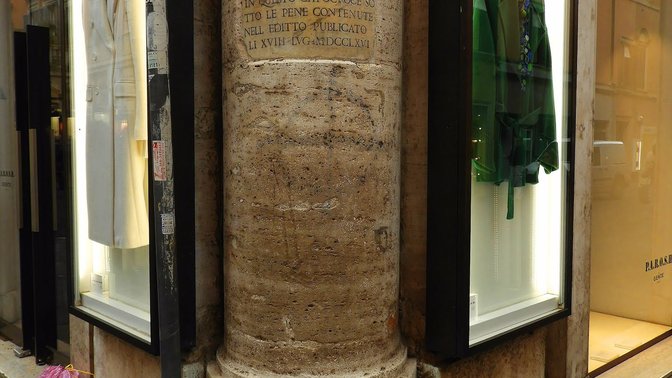
INCIPIT: Rome never ceases to amaze: amidst monumental squares and hidden alleys, small details reveal the customs and traditions of daily life centuries ago. WHERE IT IS FOUND: One of these symbols is the "Mondezzari" sign, an ancient prohibition sign that can still be seen today on Via Frattina at the corner of Via del Gambero, in Rione III (Colonna). The sign is inserted into a semi-column on the corner of a period building, at eye level. It dates back to the edict of July 18, 1764, which regulated the management of urban waste. Inserted in this manner, the only one of its kind to my knowledge, it integrates harmoniously with the architecture of the building, a typical example of 18th-century Roman architecture. HISTORY BRIEF: The signs represent one of the earliest forms of urban regulation. Some scholars consider them ancestors of modern municipal ordinances. The text is unremarkable in its composition, except for the word CAPOCROCE, which refers to the crossroads ("quadrivio"). The following is the complete inscription on the plaque: MONSIGNOR PRESIDENT OF THE ROADS PROHIBITS ANY PERSON FROM THROWING GARBAGE AND DISPOSING IN THIS CAPOCROCE UNDER THE PENALTIES CONTAINED IN THE
Location
Opening Hours
Monday: Open 24 hours | Tuesday: Open 24 hours | Wednesday: Open 24 hours | Thursday: Open 24 hours | Friday: Open 24 hours | Saturday: Open 24 hours | Sunday: Open 24 hours
Rome never ceases to amaze: amidst monumental squares and hidden alleys, small details reveal the customs and traditions of daily life centuries ago.
WHERE IT IS FOUND:
One of these symbols is the "Mondezzari" sign, an ancient prohibition sign that can still be seen today on Via Frattina at the corner of Via del Gambero, in Rione III (Colonna).
The sign is inserted into a semi-column on the corner of a period building, at eye level.
It dates back to the edict of July 18, 1764, which regulated the management of urban waste.
Inserted in this manner, the only one of its kind to my knowledge, it integrates harmoniously with the architecture of the building, a typical example of 18th-century Roman architecture.
HISTORY BRIEF:
The signs represent one of the earliest forms of urban regulation.
Some scholars consider them ancestors of modern municipal ordinances.
The text is unremarkable in its composition, except for the word CAPOCROCE, which refers to the crossroads ("quadrivio").
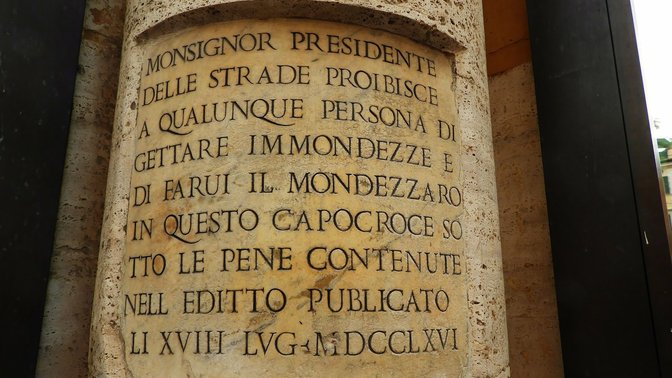
The following is the complete inscription on the plaque:
MONSIGNOR PRESIDENT
OF THE ROADS PROHIBITS
ANY PERSON FROM
THROWING GARBAGE AND
DISPOSING
IN THIS CAPOCROCE UNDER
THE PENALTIES CONTAINED IN THE EDICT PUBLISHED
JULY 18, 1766
WHAT ARE "MONDEZZARI" PLAQUES?
These white marble plaques are ancient prohibition signs, common between the 17th and 18th centuries. Several dozen are still visible in various neighborhoods of Rome.
• They were posted on street corners, near churches, monuments, or narrow streets.
• They served to discourage littering, an already widespread problem.
• The order came from the President of the Roads, an ecclesiastical figure with administrative powers.
• In some cases, those who reported a violator received a portion of the fine as a reward.
• If the plaque was near a church, the penalty could even include excommunication.
A PERSONAL EXPERIENCE:
Photographing this plaque means capturing a fragment of history that tells more than a thousand words.
Observing them today means taking a journey through time, through the architecture and social rules of daily life in 18th-century papal Rome.
TIP FOR THE CURIOUS TRAVELER:
This particular plaque is one of those places you discover by walking slowly, letting your curiosity guide you—an unusual itinerary, off the beaten tourist track, that will introduce you to a lesser-known city.
If what you've read has sparked curiosity and wonder in you, I invite you to explore my other reviews.