Palazzo Santacroce a Sant'Angelo
Via di S. Maria del Pianto, 60, 00186 Roma RM
Rating: 5.0 ★ (2 ratings)
Details
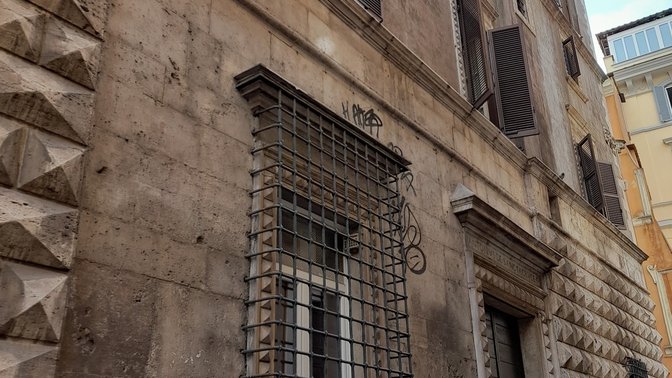
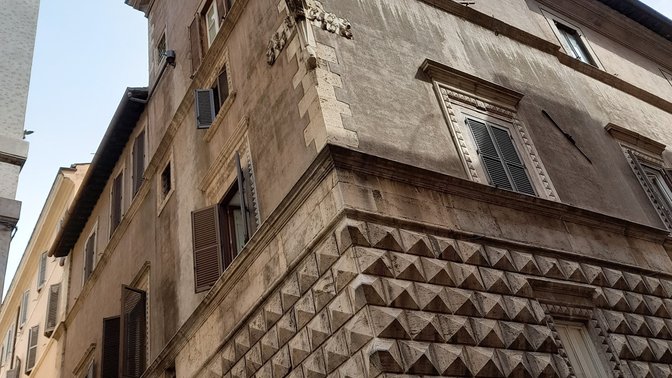
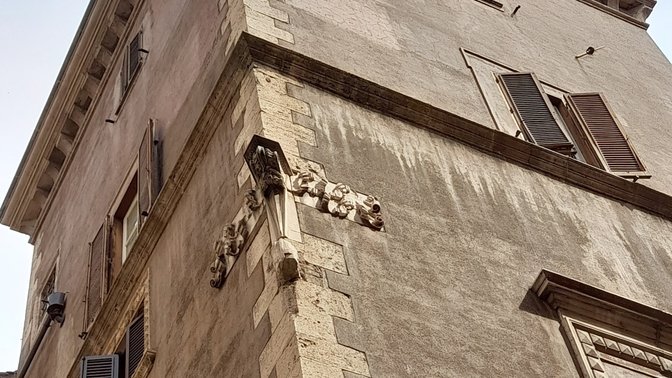
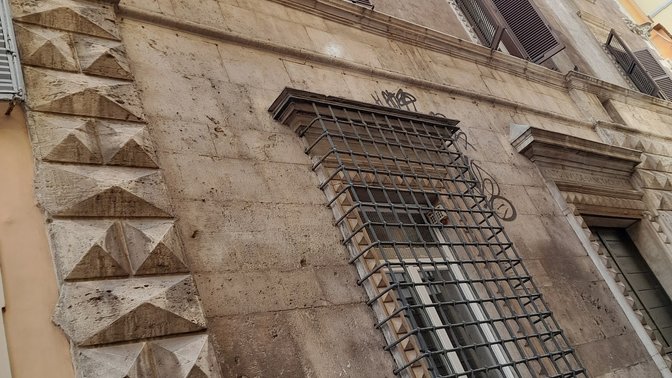
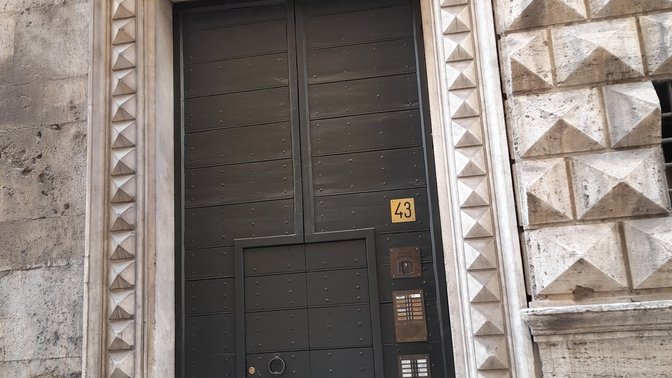
We're in the ghetto, in Piazza Costaguti, and we're about to walk down Via in Publicolis, a narrow street that leads to Via di Santa Maria del Pianto. We pass the church of Santa Maria in Publicolis on our right, which houses the tomb of the Santacroce family, who built a prestigious noble palace on the same street. After a few steps, if you look to the left, you'll see this beautiful little palace. Its main façade faces Via in Publicolis, while the tower, closely connected to the building, was built at the corner of Via di Santa Maria del Pianto. The entrance portal to the palace contains, below the architrave, the inscription in capital letters: "Antonius de Santacruce fecit," while the jambs are structured with small diamond-pointed ashlar. The tower soars into the sky in all its elegance and sinuosity. The upper section is made of smooth masonry, while the lower section, like the portal, is of larger diamond-pointed ashlar. The windows are elegantly set all around the diamond-pointed ashlar, a method of facade construction, created for defensive purposes. The tower and the diamond-pointed ashlar ensured the palace's protection, also considering that in the 16th century, the San
We pass the church of Santa Maria in Publicolis on our right, which houses the tomb of the Santacroce family, who built a prestigious noble palace on the same street.
After a few steps, if you look to the left, you'll see this beautiful little palace. Its main façade faces Via in Publicolis, while the tower, closely connected to the building, was built at the corner of Via di Santa Maria del Pianto.
The entrance portal to the palace contains, below the architrave, the inscription in capital letters: "Antonius de Santacruce fecit," while the jambs are structured with small diamond-pointed ashlar.
The tower soars into the sky in all its elegance and sinuosity. The upper section is made of smooth masonry, while the lower section, like the portal, is of larger diamond-pointed ashlar.
The windows are elegantly set all around the diamond-pointed ashlar, a method of facade construction, created for defensive purposes.
The tower and the diamond-pointed ashlar ensured the palace's protection, also considering that in the 16th century, the Santacroce family was feuding with other noble families and, for this reason, was disliked by the Papacy, which demolished the original building, later rebuilt in the structure we see today.