L'Appartamento del Cardinale Prospero Colonna
Via del Corso, 239/A, 00186 Roma RM
Rating: 5.0 ★ (2 ratings)
Details
L'Appartamento del Cardinale Prospero Colonna is an enchanting example of Baroque and Rococo elegance, nestled within the historic Palazzo Sciarra Colonna in Rome. This distinguished residence, once belonging to Cardinal Prospero Colonna di Sciarra, emanates a refined and opulent atmosphere, reflecting the prestige and wealth of its former occupant. The apartment stands out for its remarkably preserved eighteenth-century interiors, offering visitors a vivid glimpse into aristocratic Roman life and artistic taste of the era.
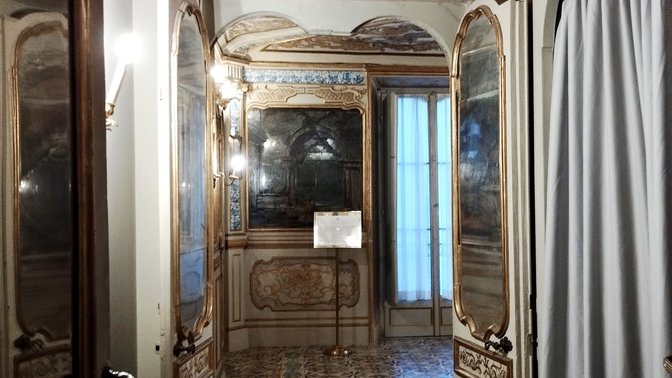
The main highlights include the magnificent Cardinal's Library and the exquisite Cabinet of Mirrors, both redesigned by the renowned architect Luigi Vanvitelli. The Library showcases understated Rococo elegance, with walls adorned in white and gold boiserie and a rich decorative programme by Stefano Pozzi. Meanwhile, the Cabinet of Mirrors captivates with its bright, lively appearance, featuring precious materials, refined furnishings, and an enchanting array of mirrors and porcelains that reflect the Rococo taste and a fondness for chinoiseries.
This splendid apartment is ideally suited for those with a keen interest in art history, particularly Baroque and Rococo architecture and decorative arts. It offers a unique experience for visitors seeking insight into noble Roman residences and the cultural patronage of powerful cardinal figures. The overall appeal lies in its authentic preservation of a bygone era, providing an intimate and luxurious historical journey through Rome's rich aristocratic past.
Location
Comments
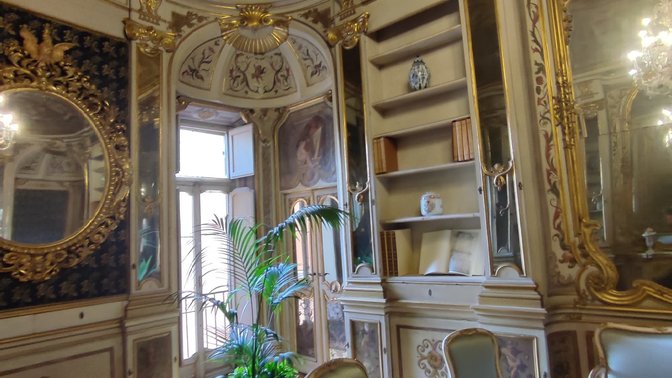
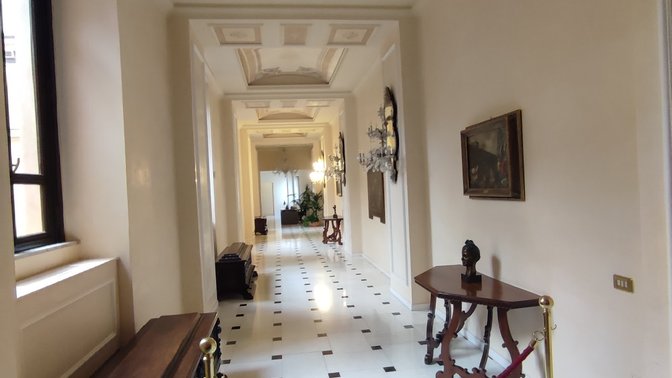
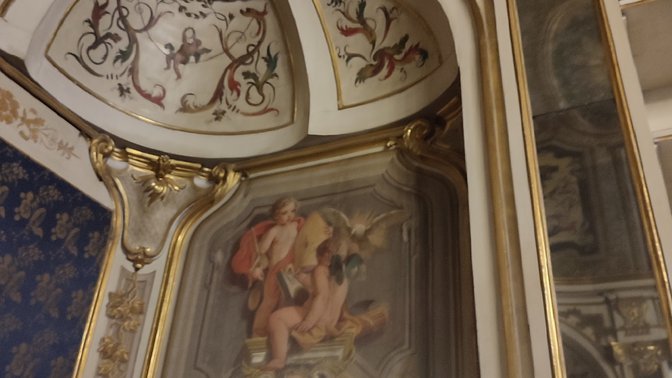
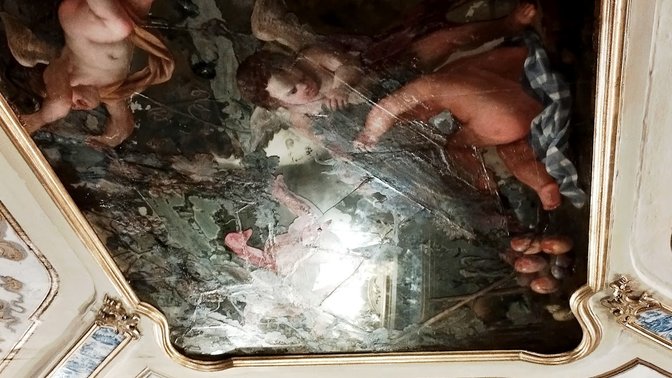
The Library of Prospero Colonna di Sciarra is the centerpiece of the renovated residence and, like the adjacent Cabinet, still retains its 18th-century Rococo-style decor, created by a young but promising Luigi Vanvitelli before he began working on the Royal Palace of Caserta, his most famous work. The room is rectangular in shape, but thanks to four large, rounded niches at the corners, it appears much softer and more welcoming. There are five mirrored doors with stylized flowers painted on the lower portions, and several open bookcases alternating with wooden shelves that once held books, separated by 12 pilasters, with opening doors covered in mirrors and gilded Doric capitals. Below the shelves are low cabinets for storing books, and above the doors are depictions of the zodiac signs, while the main walls are adorned with two large mirrors. The wonder continues as you enter a small corridor leading to the Cabinet of Mirrors (a small room measuring 5 meters on each side), which was created from a room in the 17th-century apartment, along with the passageway to the library and the hallway to the cardinal's bedroom. The Neapolitan majolica floor is striking, original and most likely a survivor from the renovations. The ceiling has a low vault with an allegory of cherubs harvesting grapes, painted on mirror by the painter Stefano Pozzi, and Delft tile ribs, which also frame the walls and pilasters. This small room features six panels decorated with mirrors on the upper section and Chinese-style paintings below (these are important examples of the so-called "Chinoiserie," decorations that are somewhat of a counterpart to the grotesques in the Domus Aurea—Editor's note). The scenes with cupids are beautiful, but unfortunately the views of ancient Rome are in very poor condition and can barely be seen. It's believed the library was also designed by Vanvitelli, but there's no certainty about the small room, as they are two different spaces in style and layout. Despite the limited space visited (plus a selection of works from the collection on the main floor), it's an exciting visit that I recommend to everyone. Need some useful info? Like and check out my other reviews of Rome and beyond.
The Library is an elongated space with wooden shelves divided by pilasters with gilded capitals, designed to house the Cardinal's book collection. The room is adorned with large mirrors, doors decorated with floral motifs, and low cabinets for additional volumes.
The Mirror Cabinet, smaller in size, features a low-vaulted ceiling with allegories painted by Stefano Pozzi. The walls are decorated with Delft tiles and ornate pilasters, while the six doors combine mirrors and Chinese-style paintings. The floor is made of original Neapolitan majolica tiles.
These rooms reflect the Rococo style of the 18th century, with elaborate details and a harmony between functionality and decoration. The apartment can currently be visited through guided tours organized by the Museo del Corso, offering the opportunity to discover this historical and artistic testimony.