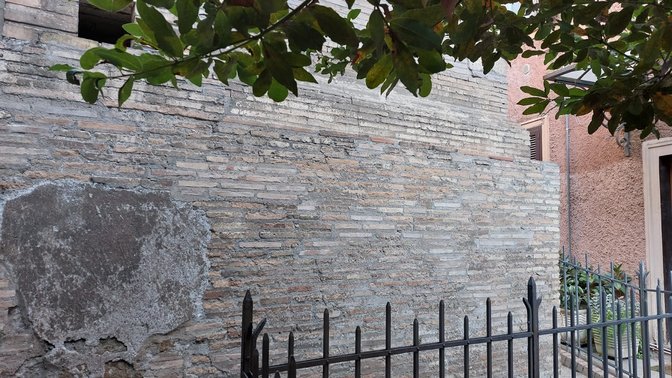
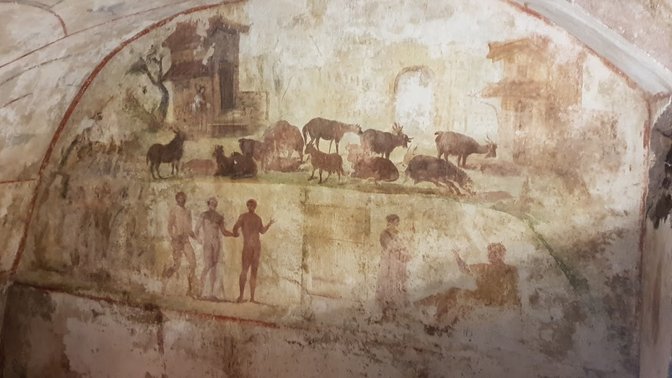
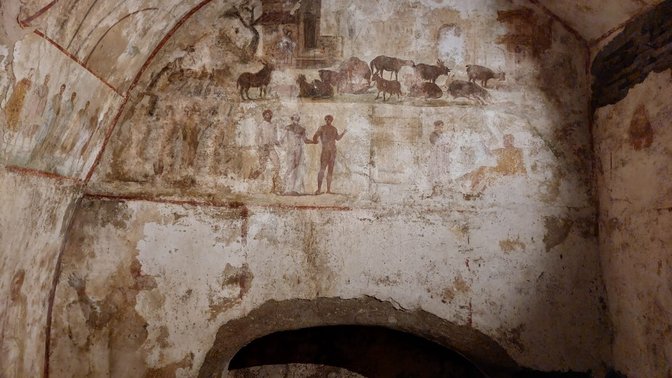
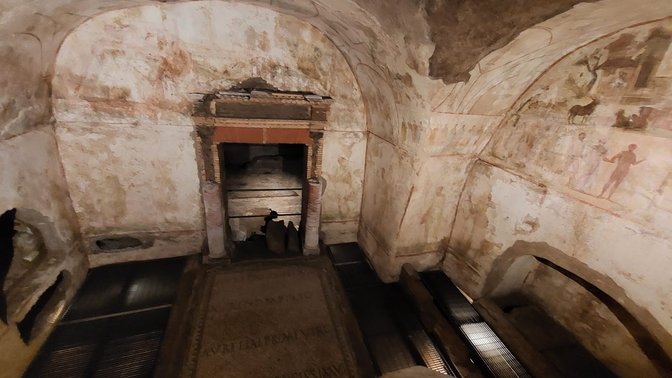
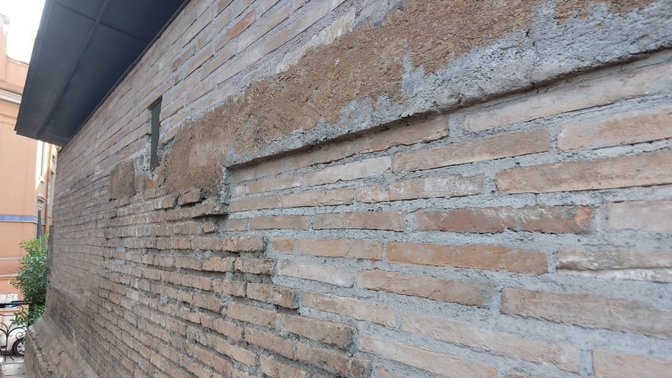
It remains one of the most exciting experiences of visiting a catacomb site, although it represents much more: a sort of cross between a pagan tomb and a Christian burial, in which symbols and representations of the two cultures coexist and intermingle (the much-cited religious syncretism finds one of its greatest expressions here). Discovered only a century ago when excavations were underway to create a garage after demolishing a rustic dwelling, it is all that remains of a monumental tomb—probably a cube-shaped tomb—that dates back to the 3rd century AD. The rather nondescript and unmarked entrance is difficult to locate. It is on two levels and has five rooms, the lower ones still intact and richly decorated. The inscriptions on the floor indicate that it belonged to the Aureli family, likely with their freedmen, and the scenes depicted on the walls and vaults can be interpreted in both Christian terms (Adam and Eve, the creation, the resurrection, the Sermon on the Mount, the Good Shepherd, etc.) and pagan terms (those who appear to be saints become brothers, the depiction of a knight's journey to the afterlife, etc.). The richness of the place cannot be captured in simple photographs. It's difficult to enter except on rare guided tours, but it's a truly unique experience. Need some help? Like and look at the photos I've posted to give you an idea, as well as the other reviews I've written about Rome and its wonders.
Link copied to clipboard!
SUBSCRIBE TO OUR NEWSLETTER
Join 10,000 subscribers and never miss out on events happening in Rome again!
Comments