Edicola di San Salvatore alla Suburra
Piazza della Suburra, 00184 Roma RM
Rating: 5.0 ★ (2 ratings)
Details
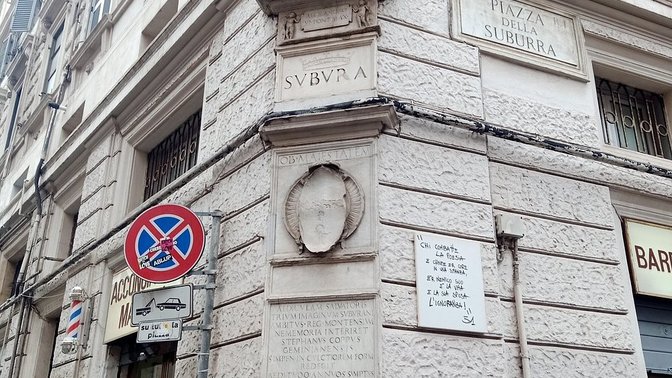
And I have to add this place to Maps, always forgotten, but which—with this FIRST review—I'll explain why it's so rich in memories. In Piazza della Suburra, the heart of the Monti district, there's a plaque that looks like a historical puzzle: a shrine composed of six marble fragments fitted together. They're all that remains of an ancient, lost church dedicated to the Trinity and known as San Salvatore alle Tre Immagini or alla Suburra, which once stood nearby before it was demolished to make way for Via Cavour in the years following the unification of Italy, in 1884 to be precise. The history of the oldest pieces, dating back to the 15th century, can now be read: at the top, a frame, a plaque with the inscription "Alexander VI Pontifex Maximus" held by two cherubs, and the word SUBURA with a crown. Further down, an inscription tells that it was a certain Stefano Coppo of San Geminiano, an apostolic delegate, who put the pieces back together at his own expense so as not to lose the memory of the place, arranging everything in this form and even leaving an annual fee to whoever would look after it. Curiously, the name "Tre Immagini" (Three Images) appears to derive from a relief wi
It's a little-known place, which I've been documenting photographically since 2018 and have featured and reviewed several times.
It's one of those places that silently resist time, the changes of the neighborhood, and the indifference of the modern city.
A small piece that deserves to be rediscovered and observed with fresh eyes.
WHERE IT IS LOCATED:
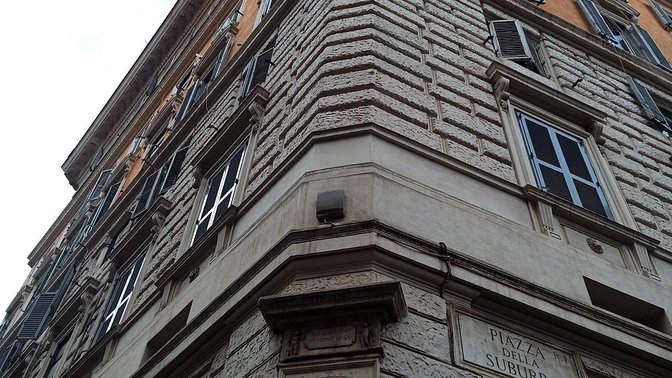
This unique shrine, the former church of San Salvatore alle Tre Immagini, is located in Rome's historic center, Rione I (Monti), in Piazza della Suburra (from the Latin "sub urbe," meaning "under the city"), to the right of the Metro B stop. This popular and densely populated area was already in Roman times, famous for its lively atmosphere, shops, and taverns.
HISTORY AND ARCHITECTURE FACTS:
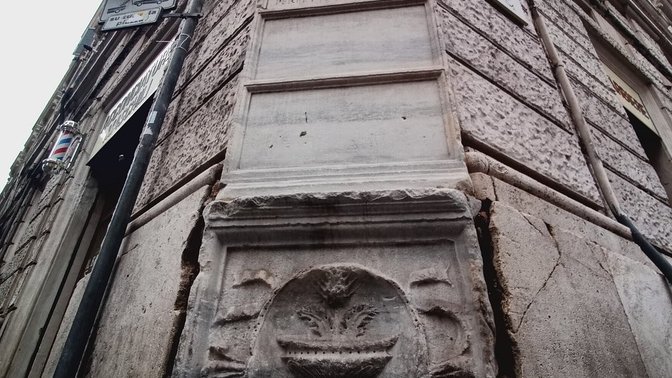
The white marble composition is placed at eye level against the chamfered, rusticated corner of a 19th-century building and is composed of several elements arranged horizontally. I list them from bottom to top:
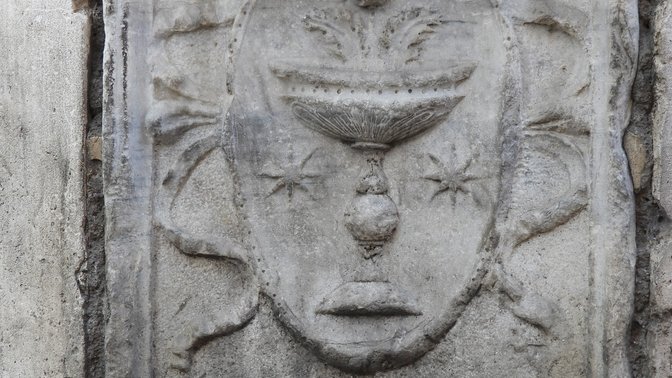
1) At the base, just above the ground, is the Coppo family coat of arms, a cup between two stars, with a blooming flower.
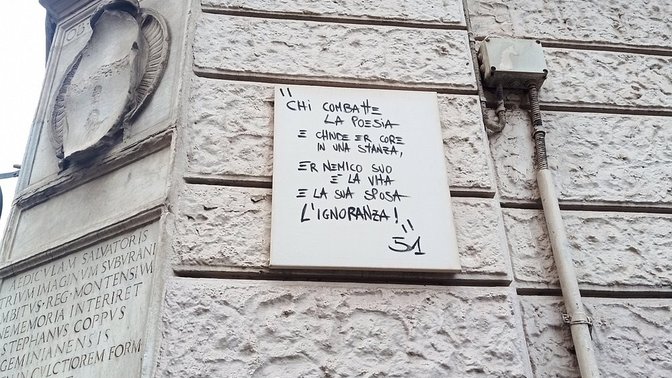
2) Above is a plaque in Latin that, in Italian, commemorates the restoration of the now-defunct church of "S. Salvatore alle Tre Immagini" (S. Salvatore alle Tre Immagini) overseen at his own expense by Stefano Coppo, apostolic delegate during the reign of Pope Alexander VI (1431-1503).
The church was unfortunately destroyed in 1884, during construction work for the inauguration of the major thoroughfare, Via Cavour.
3) Then comes the heart of the composition, the oval sacred aedicule, now empty, which likely contained the depiction of the S. Salvatore alle Tre Immagini depicting the Trinity. Behind it is a circular, radial decoration surmounted by a crown.
At the top of the panel containing the sacred shrine is the inscription:
OB MAIESTATEM
4) In an even higher panel, the inscription SUBURA with a crown above it.
5) And finally, an ornamental scroll, held by two angels, with the inscription:
ALEXANDER VI PONT MAX
FUN FACT: DID YOU KNOW THAT...?
Sacred shrines dedicated to the Madonna are symbols of popular devotion and often true works of art, so much so that some have been transferred to churches for preservation.
In the past, thanks to the lights always lit, they also served as orientation at night when the city lacked public lighting. Many are located in places associated with events believed to be miraculous and preserve stories, legends, and votive offerings.
A PERSONAL EXPERIENCE:
You won't find this place listed on large tourist signs. You stumble upon it almost by chance, walking among buildings and modern signs.
Yet, anyone who stops to look at it is captivated.
It's an invitation to slow down, observe, and be surprised.
Photographing it means capturing a fragment of history that has survived demolition, restoration, and urban transformation.
ROME AND ITS SACRED SHEDS: FRAGMENTS OF HISTORY AND DEVOTION:
Rome's sacred shrines are true testimonies to faith and popular art, even though they are often considered simple elements of street furniture.
This shrine in the Suburra, so discreet yet so rich in detail, is an important example
from a historical and religious perspective.
If you enjoyed this read, I invite you to discover my other reviews.