Cripta di Santa Cecilia
Piazza di Santa Cecilia, 22, 00153 Roma RM
Rating: 5.0 ★ (2 ratings)
Details
cappelle - ottocento - R.XIII Trastevere
Location
Contact
https://www.info.roma.it/monumenti_dettaglio.asp?ID_schede=3422
Comments
7 Apr 2026
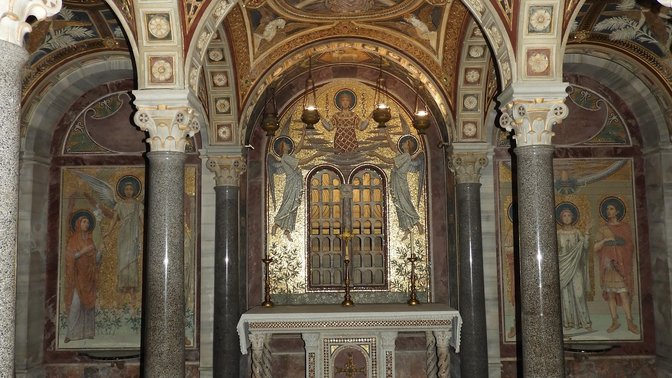
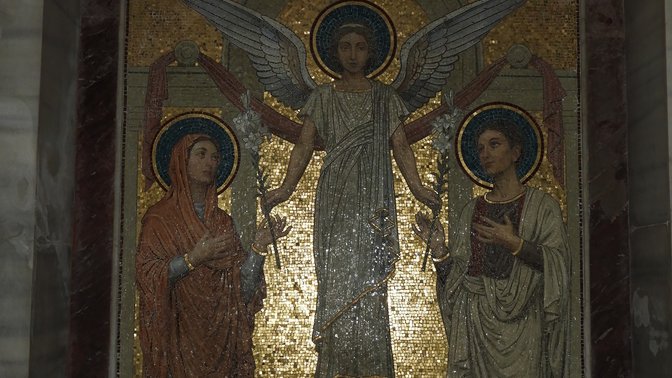
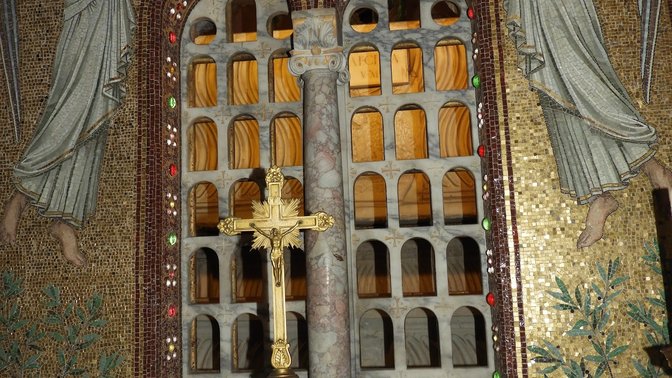
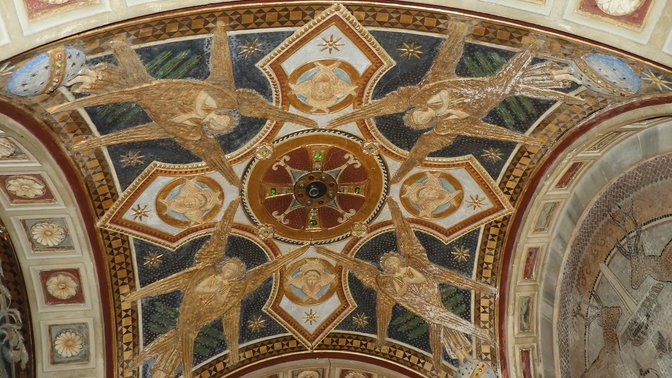
I'm adding this site to Maps because it's a unique attraction—it costs a small fee—that's absolutely worth a visit. With this FIRST review, I'll explain what you'll find: beneath the Basilica of Santa Cecilia in Trastevere lies a fascinating archaeological trail that reveals the site's millennia-old history. It begins in the underground, where the remains of a Roman domus from the 1st century BC are visible, attributed to the family of the martyr Cecilia, with rooms built in opus quadratum (square tuff) and Doric columns. Among these, an ancient caldarium (hot spring) with seven brick pools stands out, where, according to tradition, Cecilia was martyred by suffocation in 230 AD before being beheaded. The ascent leads to the crypt, built between 1899 and 1901 based on a design by Giovan Battista Giovenale in a rich Neo-Byzantine style with gold-ground mosaics decorating the lunettes with Christian symbols, gray granite columns, walls made of precious marbles such as Rosso Antico, and Cosmatesque floors. This refined underground space houses the sarcophagi of Saint Cecilia, her husband Valerian, Tiburtius, and other martyrs. The saint's sarcophagus is protected by a transenna and visible behind the altar, while a mosaic in the center depicts her glory among angels. During the work, poignant stories emerged, such as the 1900 flood of the Tiber that submerged the sarcophagi, forcing Cardinal Rampolla to drain and emotionally replace the martyrs' bones, creating a unique dialogue between ancient early Christian memory and the artistic taste of the early 20th century. To enter, ring the small door on the left, just before the portico leading to the basilica. It's definitely not to be missed. Need some useful info? Then leave a like and check out other reviews about Rome and beyond.
This is a little-known place, which I have photographed since 2006, and which I have subsequently featured and reviewed on several occasions, which is in danger of disappearing twice, first from collective memory and then even from digital maps.
I am happy to repost this story, updated and expanded, because certain urban details deserve to be rediscovered.
WHERE IT IS LOCATED:
The Crypt of the Basilica of Santa Cecilia in Trastevere is located in the historic center of Rome, Rione XIII (Trastevere), in Piazza di Santa Cecilia.
HISTORY BRIEF:
The early Christian Basilica was built on the ruins of a Roman domus from the Republican era, dating back to the 2nd century BC.
Tradition holds that it belonged to the patrician family of the Saint, who was martyred for her faith.
She was initially buried in the catacombs of San Callisto, where she remained until the 7th century.
The site where she was originally buried is still visible, and I recommend a visit.
She was then placed in this Basilica and all traces of her were lost.
Thanks to research commissioned by Cardinal Paolo Emilio Sfondrati, she was rediscovered in 1599.
According to tradition, her body was found "incorrupt," lying as if asleep.
The intense emotion of seeing her inspired Stefano Maderno to create the famous marble sculpture that now stands beneath the high altar. Admiring it carefully, one appreciates its extraordinary delicacy, which seems to recount the martyrdom without revealing it.
THE VISIT:
Descending into the basement, one enters a place where archaeology and spirituality make this environment extraordinary.
The rooms of the Roman domus, with their ancient floors and brickwork, tell the story of the daily life of a family during the Republican era.
The current crypt was built in the early 20th century by architect Giovan Battista Giovenale (1849-1934), who chose a style inspired by the Byzantine world.
Golden mosaics, geometric motifs, a bright and intimate atmosphere.
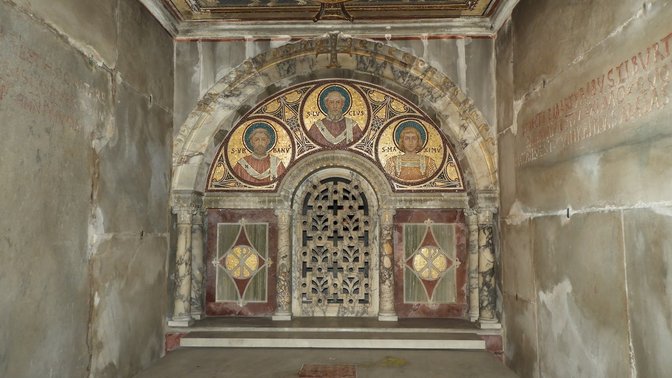
Here are the sarcophagi of Saint Cecilia, her husband Valerian, and her brother-in-law Tiburtius, who were also martyred after converting to Christianity.
The lower section also houses the remains of two popes: precious testimonies of early Christian Rome.
FUN FACT: UNDERGROUND ROME, DID YOU KNOW THAT...?
Beneath the streets of Rome lies a hidden city:
• catacombs where Christians, martyrs, and popes were buried;
• churches built over ancient temples and domus;
• unique places such as the Mamertine Prison, the Ara Coeli insula, the Crypta Balbi, and the Roman Houses on the Celian Hill.
This secret world is completed by the "City of Water" of the Vicus Caprarius and the remains of the Stadium of Domitian beneath Piazza Navona.
An underground universe that tells the story of two thousand years of history.
A PERSONAL EXPERIENCE:
The Crypt of Santa Cecilia isn't marked by large tourist signs; it's a place you stumble upon almost by chance, yet those who discover it are captivated.
It's an invitation to slow down, observe, and be surprised.
Photographing this place means capturing a fragment of history. It's a small sign that captures the imagination of an entire era.
IN CONCLUSION:
Visiting these spaces means traversing over two thousand years of history: from Republican Rome to early Christianity, up to the artistic sensibility of the twentieth century.
If this place has piqued your curiosity, let Rome continue to surprise you. Explore my other reviews to discover a secret city, made of details, emotions, and timeless wonders.