Things to do

Chiesa Grande e Cripta - Complesso del San Michele a Ripa

Via di S. Michele, 22, 00153 Roma RM

Rating: 5.0 ★ (2 ratings)

Details

La storia del Complesso Monumentale del San Michele a Ripa Grande, oggi sede di Uffici del Ministero della Cultura, investe un arco temporale che va dal 1684 al 1834 con vicende costruttive discontinue. L’origine di quello che sarebbe diventato l’Ospizio Apostolico del San Michele a Ripa Grande è da far risalire all’operato di Monsignor Carlo Tommaso Odescalchi, definito per la sua dedizione “l’apostolo della carità romana”, il quale prima come cardinale, poi come pontefice con il nome di Innocenzo XI, utilizzò le ricchezze della propria famiglia per il suo progetto assistenziale per gli orfani ed i ragazzi abbandonati e vagabondi. Il suo operato si ispirò alla Bolla “Quamvis infirma” del 1568 di Papa Sisto V Peretti, con la quale venne istituito l’Ospedale dei Poveri, il primo punto di assistenza sociale istituzionalizzata. L’Istituto, noto anche come Ospizio dei Cento Preti, realizzato su progetto di Domenico Fontana a Ponte Sisto, tra il 1586 e il 1588, nasceva “sicchè alloggiati vi fossero e mantenuti, con oratorio, refettorii, dormitorii e orti, masserizie e ogni altro apparecchiamento necessario all’abitar separato di persone di ambo i sessi” (Antonio Tosti, Relazione dell’origine e dei progressi dell’Ospizio apostolico di S. Michele, Roma, Stamperia dell’Osp. Apostolico, 1832).

Visit Website

Subscribe To Our Newsletter

Share this:

OR WhatsApp Facebook Email

Location

Contact

https://dgabap.cultura.gov.it/complesso-monumentale-di-san-michele-a-ripa-grande/

Comments

Stefano
7 Apr 2026
5.0 ★
The acoustics were very beautiful during the piano and violin concert which I unexpectedly had the opportunity to listen to.
Roberto Cecchini
9 May 2025
5.0 ★
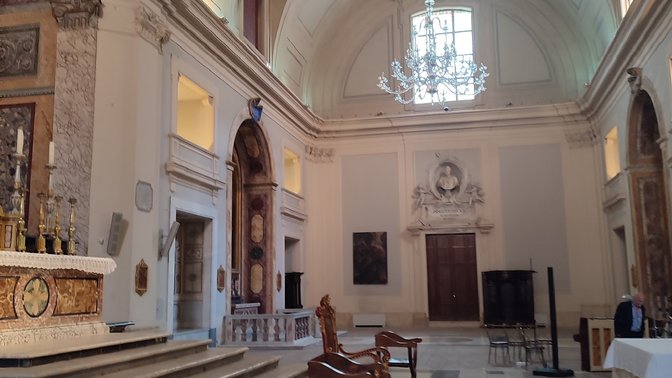
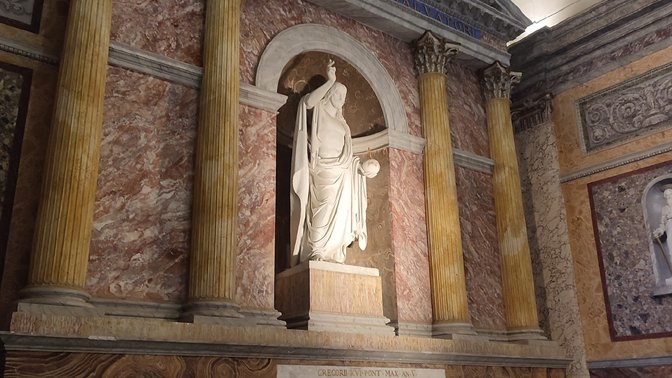
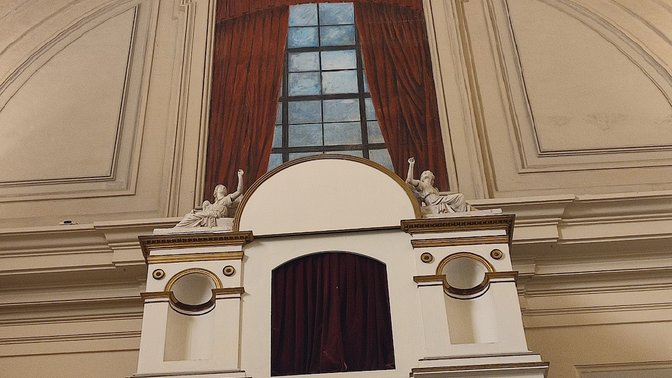
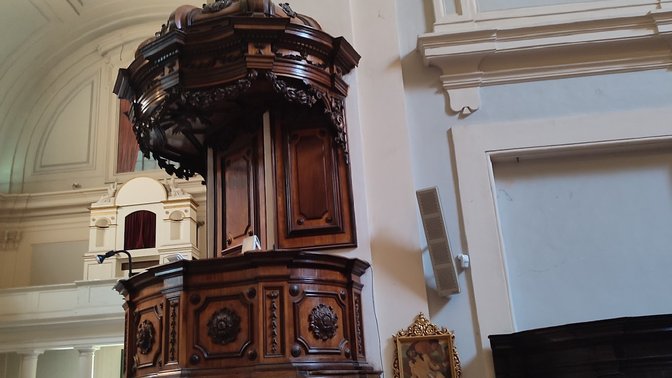
I'm adding to Maps one of the gems housed within the San Michele complex: the Church of the Transfiguration of Our Lord Jesus Christ, known as the Great Church. It was designed by Carlo Fontana in 1710, with a Greek cross plan to serve as a separation between the hospice residents who were not allowed to have contact: Boys, Old Men, and Old Women (the Zitelle had a separate church). It was consecrated only in 1715. Each wing was enclosed by a gate (you can see the posts supporting the gates) so that each community had its own section with the altar in the center. However, a dispute with the nuns of Santa Cecilia prevented the project from being fully realized, which is why one wing is missing, which was intended for the Zitelle (who, in fact, had their own little church in the conservatory). Completely unfinished? Not at all, because that missing arm was replaced by a neoclassical backdrop, created between 1831 and 1835 by Luigi Poletti and completely decorated with the faux marble technique (the craftsmanship is impressive). A monumental plaster sculpture depicting the Savior was placed here, created and donated by Adamo Tadolini, a former student of the Hospice, an academician of San Luca, and a pupil of Canova, whose neoclassical tradition he continued. You can admire his studio-bistro, filled with masterpieces, on Via del Babbuino. There are faux women's galleries on all sides and a beautiful choir that once housed a precious organ that has unfortunately been irreparably vandalized. The barrel vault with lunettes is beautiful and very large, enriched with some stucco decorations, but the most surprising thing are the copies of the canvases, also created by students of the Institute, which adorn the altars. The copy of Raphael's Transfiguration that was present at the inauguration was moved from the high altar to the one on the left as you enter, near a trapdoor leading to the room below, an incredible crypt that was attached to a cemetery and into which the bodies were lowered for burial. The entire space is decorated with paintings by the institute's students—like every other space—and the feeling of an ancient church that permeates the interior is impressive.
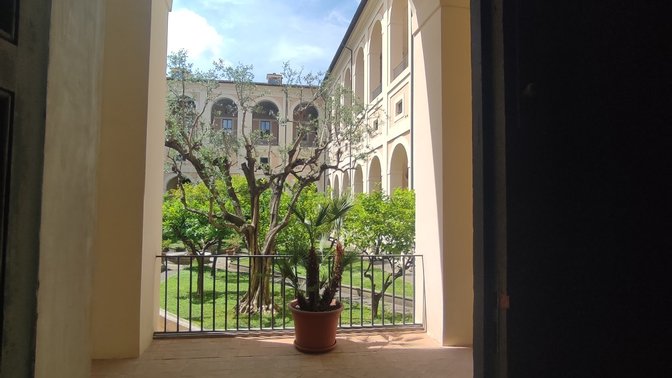
Poletti also designed and inaugurated the church's new façade overlooking the Cortile dei Vecchi on September 29, 1832. A wonderful visit that demonstrates how commitment can restore even the most unstable of youngsters to the highest levels of competence. Need some useful info? Then leave a like and check out my other reviews of Rome and beyond.

SUBSCRIBE TO OUR NEWSLETTER

Join 10,000 subscribers and never miss out on events happening in Rome again!