Cappella del Transito di S. Caterina da Siena
P.za di S. Chiara, 14, 00186 Roma RM
Rating: 5.0 ★ (2 ratings)
Details
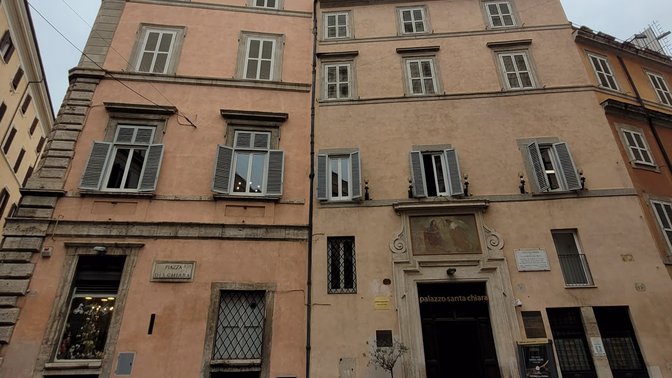
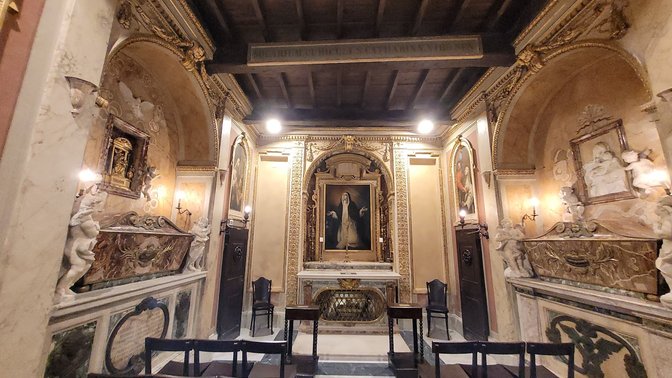
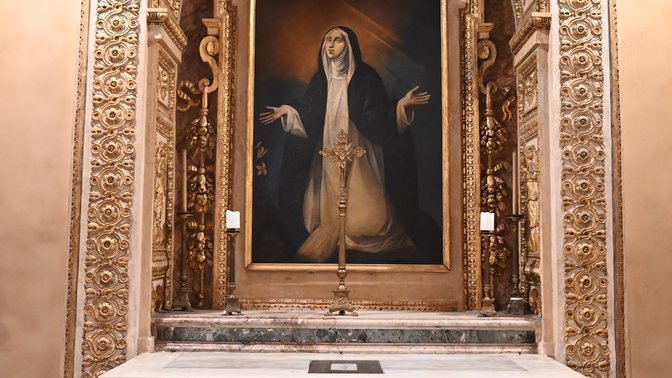
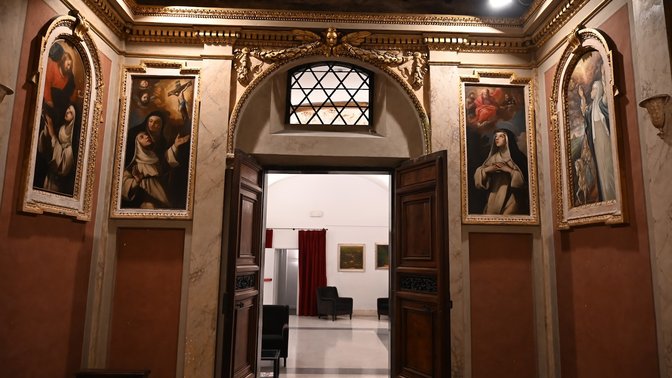
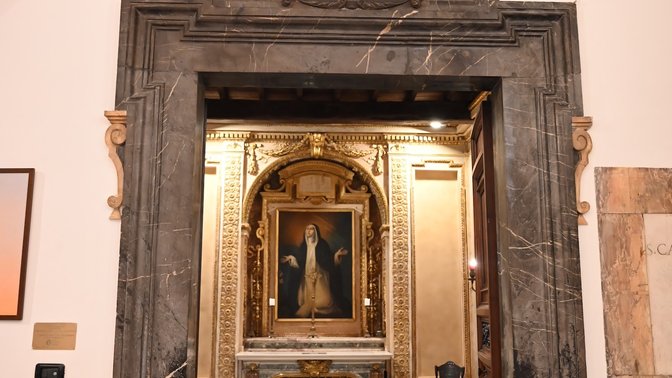
The so-called Chapel of the Transit of Saint Catherine of Siena is located in the historic center of Rome, Rione IX (Pigna), at Piazza di Santa Chiara 14, inside the 17th-century palace that was once the home of the Archconfraternity of the Most Holy Annunciation, which contains parts of an older building. It was here that Saint Catherine of Siena (1347–1380) spent the last years of her life, dying at just 33 years old. This chapel was later built in her room, although only a large portion of the wooden ceiling, with its evocative supporting beams, remains of the original. To visit it, you must enter the palace. The chapel is a significant example of Baroque art, with a rectangular plan and small dimensions. In the presbytery stands a polychrome marble altar containing the visible remains of St. Joannis, while above it is the altarpiece, set in a niche with a rounded arch. The painting depicts the Saint kneeling and in prayer. On the two side walls, facing each other, are two more tombs: the one on the right is that of St. Exuperantius, and the one on the left is that of St. Heraclius. Along the walls are six other paintings depicting iconographic aspects of the Saint's life, five
It was here that Saint Catherine of Siena (1347–1380) spent the last years of her life, dying at just 33 years old. This chapel was later built in her room, although only a large portion of the wooden ceiling, with its evocative supporting beams, remains of the original.
To visit it, you must enter the palace. The chapel is a significant example of Baroque art, with a rectangular plan and small dimensions. In the presbytery stands a polychrome marble altar containing the visible remains of St. Joannis, while above it is the altarpiece, set in a niche with a rounded arch. The painting depicts the Saint kneeling and in prayer.
On the two side walls, facing each other, are two more tombs: the one on the right is that of St. Exuperantius, and the one on the left is that of St. Heraclius.
Along the walls are six other paintings depicting iconographic aspects of the Saint's life, five of which are believed to be the work of the painter Giuseppe Cesari, known as Cavalier d'Arpino (1568–1640).
The Saint's body was moved to the nearby Basilica of Santa Maria sopra Minerva in 1380.