Tomba dei Valeri
Via dell'Arco di Travertino, 151, 00178 Roma RM
Rating: 5.0 ★ (3 ratings)
Details
Indirizzo: Via dell'Arco di Travertino 151
Location
Contact
https://www.info.roma.it/monumenti_dettaglio.asp?ID_schede=5197
Comments
8 Oct 2024
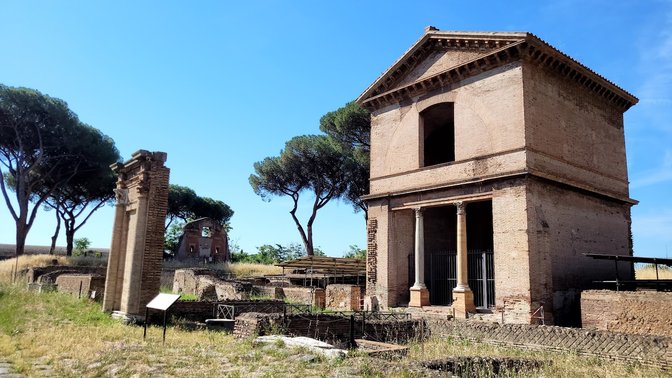
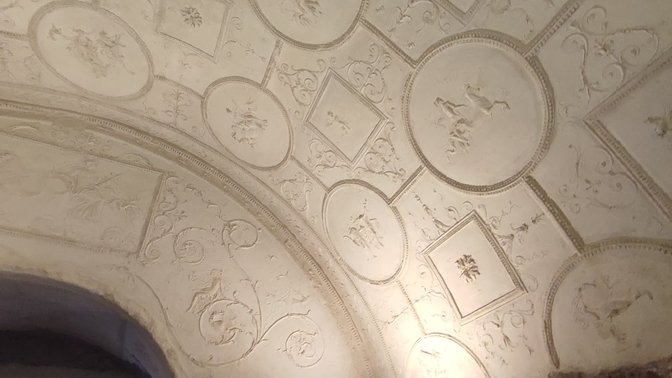
After being closed for a long time for restoration, along with the contemporary and opposite Tomb of the Pancrazi, it represents one of the park's gems, thanks to its richly decorated hypogeum with white stucco. The surrounding area is noteworthy, demonstrating how this structure was flanked by other civil buildings such as hostels, depots, post offices, and so on. The beautiful peristyle—dating back to the 19th century, with only one of its two columns original—occasionally hosts events for which the space is opened to a limited audience. I am among the fortunate ones who were the first to visit the burial chamber, dating to the time of Marcus Aurelius (160-170 AD), after its restoration and before its reopening, which took place over two years ago and is limited due to its location. A marvel that seems to have been created yesterday, not almost two thousand years ago, and is very reminiscent of the ceiling of the underground Basilica of Porta Maggiore (see my review), or one of the pagan tombs in the Catacombs of San Sebastiano, but also the decorations found in the Domus Aurea, in the so-called Caligula Bridge in the Domus Tiberiana, or in Nero's cryptoporticus.
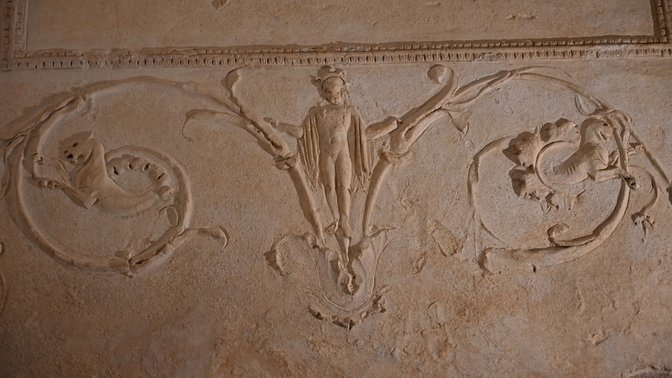
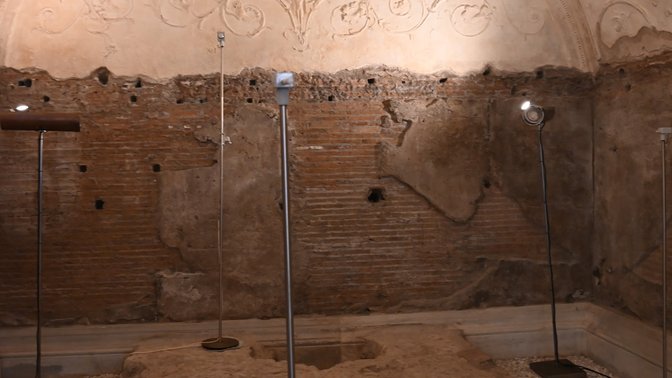
You descend into the underground chamber, which is divided into several areas, but the main one, which contained the sarcophagus, is the real attraction. These stuccoes have been restored to their former splendor. The tomb itself consists of two opposing chambers, both covered by a barrel vault, but only one is richly decorated with stucco depicting maenads, satyrs, nereids, fantastical marine creatures, dancing figures, and a veiled female figure carried by a griffin, symbolizing the soul of the deceased. The hole you see in the ceiling was not made by tomb raiders, but by the archaeologist who discovered the site and then excavated around it to reveal the original entrance. Around this tomb are the remains of a post station. I'm posting a few shots, but check out the updated photos and other reviews I've written about Rome and its wonders. If this was helpful, please like.
You descend into the underground chamber, which is divided into several areas, but the main one, which contained the sarcophagus, is the real attraction. These stuccoes have been restored to their former splendor. The tomb itself consists of two opposing chambers, both covered by a barrel vault, but only one is richly decorated with stucco depicting maenads, satyrs, nereids, fantastical marine creatures, dancing figures, and a veiled female figure carried by a griffin, symbolizing the soul of the deceased. The hole you see in the ceiling was not made by tomb raiders, but by the archaeologist who discovered the site and then excavated around it to reveal the original entrance. Around this tomb are the remains of a post station. I'm posting a few shots, but check out the updated photos and other reviews I've written about Rome and its wonders. If this was helpful, please like.
2 Jul 2024
The Tomb of the Valerii, opposite the Tomb of the Pancrazi, is located in the Archaeological Park of the Tombs of Via Latina, near the turnoff from Via Appia Nuova to Via dell'Arco di Travertino, in District VIII (Tuscolano).
Discovered in 1858 by Lorenzo Fortunati, its name was given by convention, and thanks to brick stamps found inside, it can be dated to the second half of the 2nd century AD.
The large, recently constructed brick building is located to the right of Via Latina, in the area adjacent to the so-called "mansio" (hotel and baths). It was built for ornamental purposes but primarily to protect the original hypogeum beneath, and is one of three that can be visited inside and in the hypogeum.
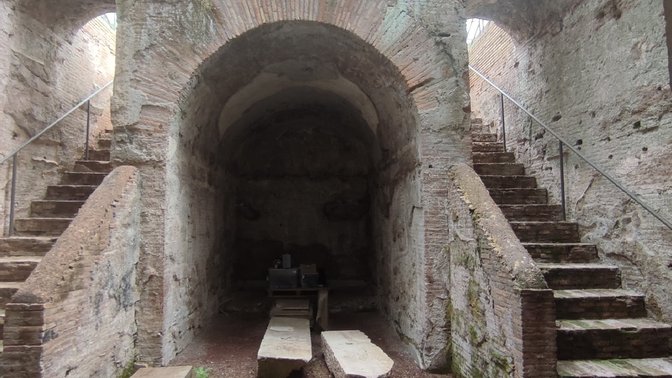
Funeral ceremonies were held in the upper section. Outside, two symmetrical external staircases lead to the underground area, where a courtyard provides light for the adjacent rooms. There are two opposing burial chambers, both with vaulted ceilings. The larger one, likely the first one used, is awe-inspiring. Upon entering, the view is breathtaking. Raising our heads, we see a vault completely decorated with 35 splendid monochrome medallions in white stucco, still in excellent condition, depicting young satyrs, marine animals, deities, and more.
The other, opposite chamber has survived relatively bare, with only a few marble elements remaining.
At the time of its discovery, several sarcophagi and other furnishings and artifacts were still present, some of which are currently on display in the Vatican Museums.
NOTE:
Visit to the park is free (closed on Mondays). However, I recommend a paid visit to the three main tombs. There are remarkable remains, some of incredible beauty. Explanations will also be provided to help you fully understand the sites and works.
Discovered in 1858 by Lorenzo Fortunati, its name was given by convention, and thanks to brick stamps found inside, it can be dated to the second half of the 2nd century AD.
The large, recently constructed brick building is located to the right of Via Latina, in the area adjacent to the so-called "mansio" (hotel and baths). It was built for ornamental purposes but primarily to protect the original hypogeum beneath, and is one of three that can be visited inside and in the hypogeum.
Funeral ceremonies were held in the upper section. Outside, two symmetrical external staircases lead to the underground area, where a courtyard provides light for the adjacent rooms. There are two opposing burial chambers, both with vaulted ceilings. The larger one, likely the first one used, is awe-inspiring. Upon entering, the view is breathtaking. Raising our heads, we see a vault completely decorated with 35 splendid monochrome medallions in white stucco, still in excellent condition, depicting young satyrs, marine animals, deities, and more.
The other, opposite chamber has survived relatively bare, with only a few marble elements remaining.
At the time of its discovery, several sarcophagi and other furnishings and artifacts were still present, some of which are currently on display in the Vatican Museums.
NOTE:
Visit to the park is free (closed on Mondays). However, I recommend a paid visit to the three main tombs. There are remarkable remains, some of incredible beauty. Explanations will also be provided to help you fully understand the sites and works.
The park is free to access, but to visit the tombs, you must book a guided tour, either online or directly on site. Kudos to the guides, who are truly kind and knowledgeable.