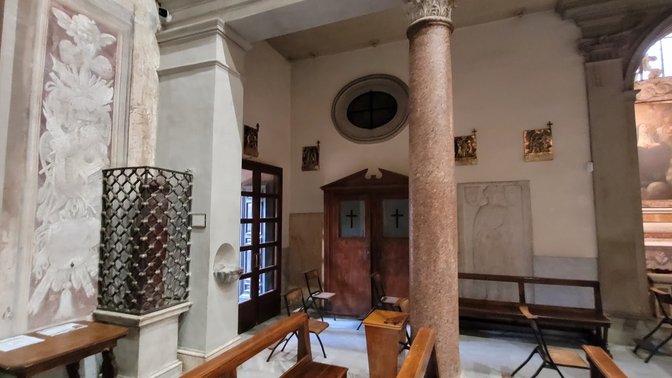
La cd "Colonna del Martirio
Via Giovanni Giolitti, 154, 00185 Roma RM
Rating: 5.0 ★ (3 ratings)
Details
La cd "Colonna del Martirio" stands as a poignant relic within the ancient Church of San Sebastiano in Rome, offering a profound connection to early Christian history. This revered column is traditionally associated with the martyrdom of Saint Sebastian, imbuing the space with a deeply reflective and solemn atmosphere. Its setting within the historic church, rebuilt in 1608, invites visitors to contemplate centuries of faith and sacrifice, making it a distinguished site for spiritual and historical exploration.
Within the Chapel of the Relics, the column itself is carefully preserved, alongside an arrow, both believed to be connected to Saint Sebastian's ordeal. The church also features a spectacular carved wooden ceiling, providing an impressive architectural backdrop to the sacred artefacts it houses. Visitors are encouraged to observe these tangible pieces of history, reflecting upon the enduring narratives of devotion.
This significant location is particularly well-suited for those with an interest in religious history, hagiography, and the tangible legacies of Christian martyrs. It offers a more contemplative experience, ideal for pilgrims and history enthusiasts seeking a quiet moment of reflection rather than grand displays. The overall appeal lies in its powerful historical resonance and the opportunity to connect with a profound aspect of Rome's spiritual past.
Location
Contact
https://esploraromablog.com/2016/02/12/la-colonna-del-martirio-e-una-misteriosa-pozione-magica/#:~:text=LA%20COLONNA%20DEL%20MARTIRIO%20e%20%E2%80%9Cuna%20misteriosa%20pozione%20magica%E2%80%9D.,-Postato%20il%2012&text=%C3%88%20in%20via%20G.,per%20es
This church (the original one dates back to the 4th-5th century AD) was named after Saint Bibiana because, according to tradition, the family home where she was martyred along with her mother and sister stood nearby.
In 1624, the body of the Saint was discovered. For this reason, in 1628, given the building's poor condition, Pope Urban VIII commissioned the young Neapolitan architect and sculptor Gian Lorenzo Bernini (Naples 1598 - Rome 1680) to renovate it. Bernini largely restored the original appearance, starting with the façade, which he gave an early Christian touch to, the presbytery (apse and high altar), and the two chapels to its sides.
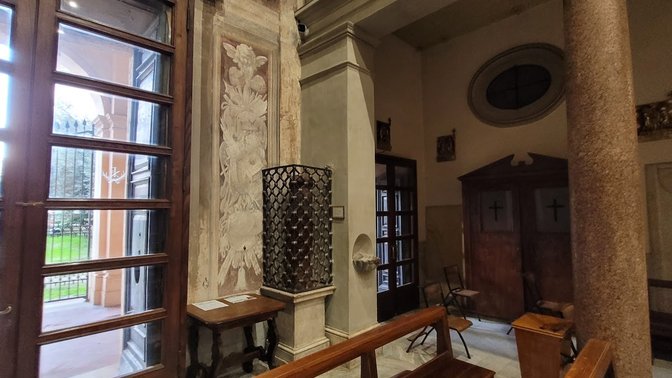
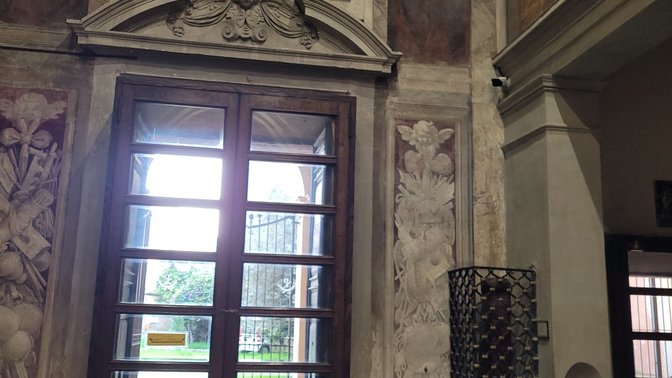
This church contains an important object of worship and devotion that has been a very important symbol for the faithful over the centuries. It is encountered as soon as one enters the church through the portal on the left. It is a column believed to be the one used for the "Martyrdom of the Saint," where she was bound and killed by flagellation because, being a Christian, she refused to convert to paganism.
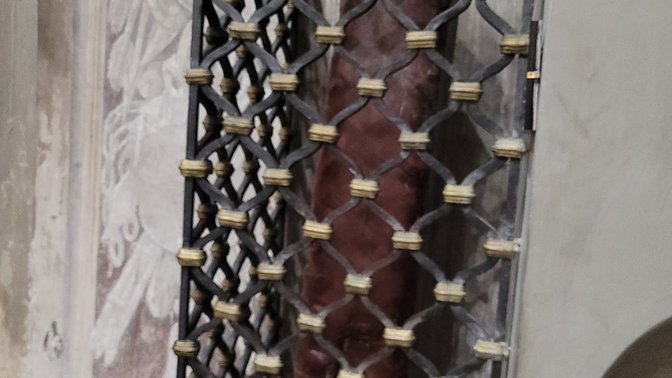
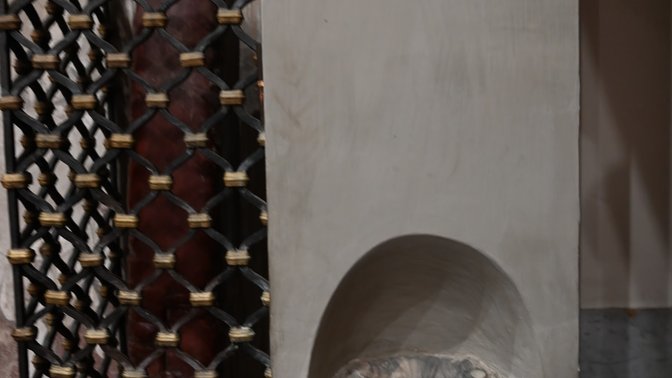
The column is made of pink marble (rosso antico) and is protected by an ornamental wrought-iron grille in the typical shape of knotted ropes (with a golden knot), designed by Bernini.
The column, although not easily visible due to the grille, is quite worn. In ancient times, the faithful would scrape off the dust and dissolve it in the water from the well in the nearby garden, making a "potion" with the herbs found there, which, according to tradition, had been soaked in the martyr's blood, attributing to it healing, if not miraculous, properties.
The Saint's feast day is December 2nd.
TRIVIA ABOUT THE STATUE OF SAINT BIBIANA
On the high altar is a statue of the young Saint Bibiana, created by the great Bernini. She is depicted just before serenely walking toward martyrdom, with her head bowed and her gaze raised hieratically. Her right arm rests on the martyr's column—a sign that the sculptor also considered it a fundamental element of iconography, having included it in the composition. Finally, with her left hand, she delicately holds a golden palm (a symbol of martyrdom).
The overall workmanship is magnificent, from the definition of the face and hands to the superb and skillful draping of the robes—a work that alone is worth a visit to this church.