Apollo di Veio
Via di Villa Giulia, 9, 00196 Roma RM
Rating: 5.0 ★ (4 ratings)
Details
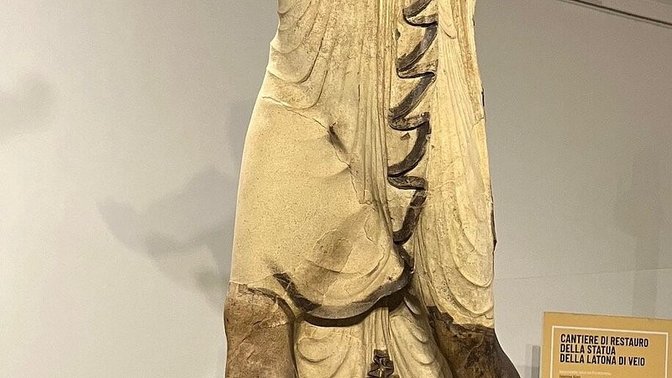
Apollo di Veio is a remarkable life-size painted terracotta Etruscan statue, dating from approximately 510-500 BCE, which captivates visitors with its dynamic presence. Originally part of a larger sculptural group adorning the roof of the Portonaccio Temple in Veii, the figure of Apollo, or Aplu in Etruscan, was positioned about twelve metres above ground, likely depicting a dramatic mythological encounter with Heracles over the sacred Golden Hind. Its unique Etruscan style, characterised by a compelling blend of rigidity and expressive movement, alongside its striking polychrome finish, makes it a standout piece of ancient art. This masterpiece is now housed within the elegant National Etruscan Museum of Villa Giulia in Rome, offering a serene and culturally rich atmosphere.
The statue stands impressively at approximately 186 cm (5 feet 11 inches) tall, having been meticulously restored after its discovery in fragments in 1916. Visitors can admire its distinctive "archaic smile", flowing drapery, and finely sculpted feet, all hallmarks of Etruscan artistry, displayed thoughtfully in Room 40 of the museum. Often presented with complementary artefacts from the Portonaccio Temple, such as a head of Mercury, the Apollo provides a profound insight into the pre-Roman civilisations of central Italy. The museum itself, set within the stunning Renaissance architecture and gardens of Villa Giulia, further enhances the overall visitor experience.
This iconic artwork is ideally suited for those with a keen interest in Etruscan history, ancient art, and pre-Roman cultures, offering a fascinating departure from Rome's more conventional classical sights. It particularly appeals to visitors seeking a deeper understanding of Italy's diverse ancient heritage. The beautiful setting of the Villa Giulia makes it a perfect destination for cultural excursions, blending the appreciation of Renaissance design with profound archaeological discoveries. It works wonderfully for both those on a brief city break wishing to glimpse Etruscan civilisation and for travellers desiring a more in-depth exploration of this intriguing era.
Location
Contact
https://www.museoetru.it/capolavori/apollo-di-veio
Comments
Discovered in 1916 in the sanctuary of Portonaccio in Veii, it was part of a sculptural group that decorated the roof of a temple dedicated to Menerva, depicting myths related to the god. The polychrome, although partially faded, hints at the original vibrant colors, evoking the charm of Etruscan art.
Observing the Apollo of Veii up close is an engaging experience, allowing one to immerse themselves in the culture and symbolism of an ancient people, making a visit to Villa Giulia a moment of great beauty and reflection.
Entering a large room dedicated to the finds from Veii, we can admire this large, hand-molded terracotta statue, dating back to around 500 BC, which "miraculously" retains its color, with its dark skin and the light color of its draped robes, elegantly finished with black trim.
The expressive face, with large eyes and a distinctive hairstyle, is also beautiful.
The god appears in motion; it is unknown what he was holding, as both arms are missing, but it is likely a weapon, most likely a bow.
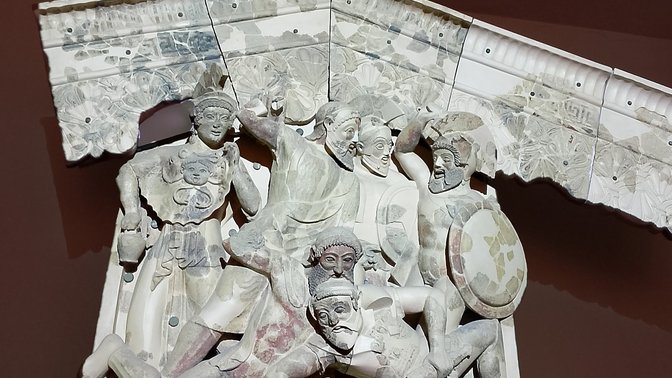
To better understand this extraordinary scene, we must observe the mighty statue in front of him, of equal artistic quality, which represents the mythical figure of Hercules, depicted in one of his twelve labors.
Hercules has just captured the golden-horned deer, sacred to the goddess Artemis, sister of Apollo, who is preparing to wrestle him to free her.
This is a splendid group, which helps us understand and imagine an iconic mythological scene, and appreciate the artistic level achieved by this ancient civilization.
If you enjoyed reading this and found it helpful, I invite you to read my other reviews.