Porta Pia
Piazzale di Porta Pia, 00187 Roma RM
Rating: 5.0 ★ (9 ratings)
Details
Porta Pia, a monumental gateway nestled within Rome's historic Aurelian Walls, stands as a testament to the architectural brilliance of Michelangelo Buonarroti, one of his final works commissioned by Pope Pius IV between 1561 and 1565. This magnificent structure, replacing the ancient Porta Nomentana, was strategically designed to align with the new Via Pia, connecting the Quirinal Hill to the city's periphery and demonstrating a unique blend of military functionality and artistic expression. Its distinct facades, one grander and more decorated facing inwards, the other more classical towards the former countryside, offer a captivating glimpse into Renaissance design and a tangible sense of Rome's transformative history.
Visitors can appreciate the intricate details of Michelangelo's Renaissance architecture and reflect on Porta Pia's profound historical significance. This site is famously known for the "Breach of Porta Pia" in 1870, a pivotal moment when Italian forces entered Rome, leading to the unification of Italy and the end of the Papal States. Within the gatehouse, the Museum of the Bersaglieri offers a comprehensive insight into this elite Italian Army corps, displaying an array of uniforms, weapons, documents, and artefacts from the Risorgimento and subsequent conflicts. Outside, the imposing bronze Monumento al Bersagliere further commemorates their valiant spirit.
Porta Pia particularly appeals to history enthusiasts and those with an appreciation for Renaissance artistry, offering a compelling narrative of Italy's unification. The surrounding Nomentano district and Piazza Fiume provide a vibrant, authentic Roman atmosphere, where one can find local eateries and shops, making it ideal for visitors wishing to experience both historical depth and contemporary Roman life. It serves as an excellent complement to a visit to nearby cultural treasures such as the Villa Borghese and its galleries.
Location
Comments
The view is simply breathtaking, with its artistic details captivating your attention. It's the perfect place to take unforgettable photos and soak up the beauty of Rome.
Furthermore, the surrounding park offers an excellent opportunity to relax and enjoy a moment of tranquility. Whether you're a history buff or simply looking for a fascinating place to visit, Porta Pia is an absolute must-see on your itinerary!
Don't forget to take a moment to admire the grandeur of this symbol of the city. Highly recommended!
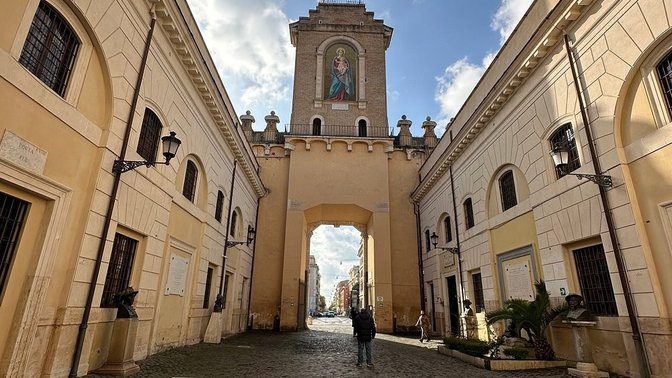
The nineteenth-century façade of the gate visible from the Piazzale, if we were to compare it with the one overlooking Via XX Settembre, is instead the product of a neoclassical architectural culture, influenced by an exemplary, yet elegant, scholastic approach.
It deserves to be rediscovered and revisited, so that new visitors can discover it and be enchanted by its beauty and significance.
PORTA PIA: A JOURNEY THROUGH ROME'S HISTORY:
Porta Pia faces the inner side of the Walls, onto Via Venti Settembre, in Rione XVIII (Castro Pretorio).
Some of the photos I took during my visits accompany this updated review.
MICHELANGELO AND THE BIRTH OF PORTA PIA:
This monumental and elaborate gate has nothing to do with the contemporary and later ones located on the Aurelian Walls; in fact, it was commissioned, many centuries later, around 1560, by Pope Pius IV (Medici).
The project was designed by the great and elderly Michelangelo Buonarroti, who died a few years later.
Since there are no original drawings of the entire project, only a few details, it is unknown how closely his instructions were adhered to. In any case, significant modifications were made in the following centuries, especially to the exterior.
ARCHITECTURE: A MASTERPIECE BETWEEN THE RENAISSANCE AND BAROQUE
THE INTERIOR SIDE (FACING THE CITY):
Made of brick and travertine, the one facing the ancient city, it can be considered on three levels.
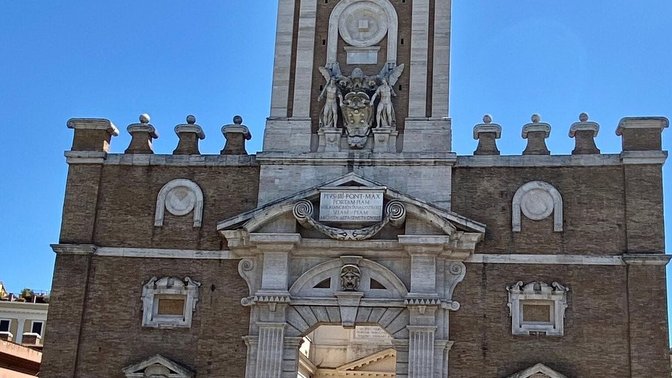
The first, in the center, features a majestic portal framed by pilasters, which give the building a tripartite structure, and a large composite triangular pediment.
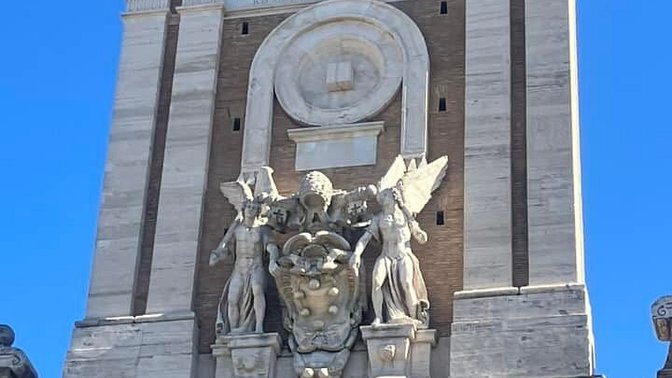
The summit is also noteworthy, with its high pediment highlighting the coat of arms of Pope Pius IV, supported by two angels with outstretched wings.
The area in front is bordered by several small travertine columns, joined by ornamental iron bars.
EXTERIOR SIDE (FACING VIA NOMENTANA):
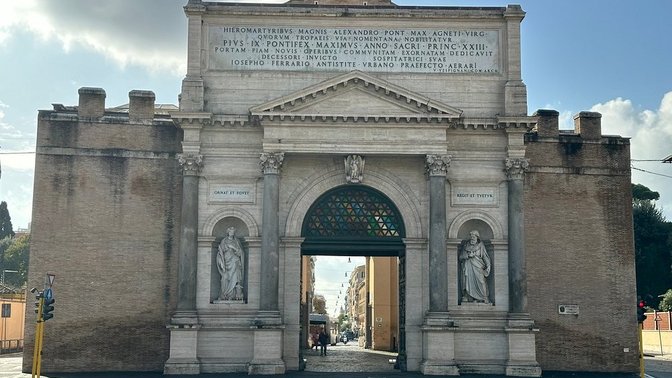
Completed much later in 1869 in the Imperial style, it features two tiers and is divided into three parts by four Corinthian columns. The two central columns frame a round arch, capped by a large wooden coffered portal, and above it a triangular pediment.
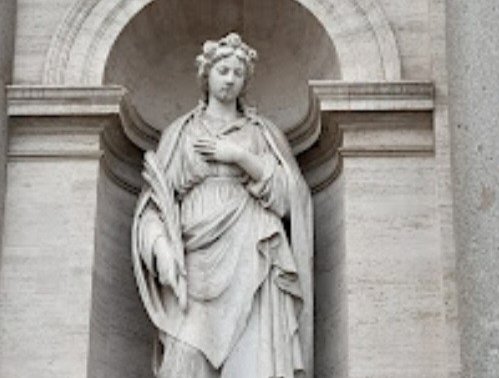
In the two lateral sections, within semicircular niches with round arches, are two large statues of Saints (Saint Agnes and Saint Alexander).
THE BERSAGLIERI HISTORICAL MUSEUM:
Between the two facades is a courtyard that has housed the Bersaglieri Historical Museum since 1932, displaying memorabilia, uniforms, weapons, and historical documents.
Among the various memorabilia, it displays the bicycle of Enrico Toti, a hero of the Risorgimento.
The War Memorial and the rooms dedicated to various wars make the museum a place of remembrance and reflection.
HISTORY:
Porta Pia is remembered for the historic event known as "The Capture of Porta Pia," which occurred in 1870, when the Italian army breached the Aurelian Walls, not far from the gate.
FUN FACT: DID YOU KNOW THAT...?
A cannonball used by the Italian army during the siege before the capture of Porta Pia can still be seen "immersed" in the Aurelian Walls today.
DISCOVERING ROME'S TREASURES:
If what you've read has sparked curiosity and wonder, I invite you to explore my other reviews to discover the timeless treasures that Rome has to offer.
Every corner of the city has a story to tell and an emotion to share.